Today, I want to talk about an interesting topic about predation and car chasing. For years, force free trainers have labeled car chasing as a fear response. Twisting it to fit their narrative and avoid consequence based methods, yet with little success, the behavior keeps defying their framework. I'm convinced that they are ideologically obsessed with fear because it conveniently explains all unwanted behaviors without ever confronting the role of conflict, drive, or punishment during learning. Simone Mueller is one of them. She has it all down, apparently in her predation substitute training method. She is German. She's in Germany. Her claim is that car chasing is a pure fear response.
And yeah, I've got to disagree and I'm going to break this down. Over the years, I've invited Simone to discuss this on my podcast. I offered her multiple times, but she has refused. I know she works with clients online, so I even proposed using her method with a client dog we had here who kills small rodents and rabbits. That was still a no go. She refused. So, I'm going to go solo to explain why that pseudoscience approach is misleading. And frankly, not going to work. If you haven't subscribed to the channel, do so, and let's dive in.
Let me start with what Simone Mueller is putting out there. She had some recent posts on social media and she argues, as she always does, that car chasing is not predatory behavior. She says dogs lunge and bark at cars to drive them away, not to catch them. And that this is different from chasing wildlife. She calls this, distance decreasing predatory act. Distance decreasing predatory act. And her take basically is that chasing a car is a fear response rooted in stress of course. Mueller’s solution is confidence building and emotional safety work.
At first glance, the words may impress the average dog owner who needs help. It all may sound logical. Dogs do react to moving objects, but here is the flow. Cars do not charge at dogs. Cars simply drive by. Drive away. If it were pure fear, we would expect to see retreat, freezing and so on. Definitely not a pursuit right? Ethology shows that the same neural machinery that drives the dog to chase a squirrel can also trigger on motion on sound contracts from cars. It is about context. It's not just some emotion. Simone Mueller’s refusal to collaborate, turning down my podcast invites and, the client rehab, in my opinion, misses a chance to test this again. Real behavior challenges.
But let's get to the heart of it. I argue that car chasing isn’t fear based. It's dopamine driven, and it's tied to a predatory instinct. Predatory behavior isn’t emotional. It's biological. It's a motor pattern hardwired by evolution, triggered by movement. Sound contrast. A car flying by with its roar and shifting shapes and so on. That's a trigger. And the dopamine hit from that chase keeps it rewarding. This is not fear. If it were, dogs would back off. We would see them turning their head or body sideways, freezing and so on as I was just saying. Instead we see a pursuit, a misdirected predatory sequence. We all have seen dogs humping a pillow, right? That is a clear sexual displacement and cars are more than a substitute here if you want. And the Mueller’s fear label overlooks that thrill. I've seen this with clients. Dogs that light up at moving objects not because they are scared, but because their prey drive is firing.
There is another possibility. Car chasing can also sometimes have a territorial component. However, it's really critical to understand how that develops and why it's still not primarily fear based. A dog repeatedly sees cars pass, in front of the yard or fence. Then the car disappears. To the dog, that's a game that keeps reinforcing the action. My barking made the intruder go away. Over time, this morphs into a territorial based ritual where the dog is aroused and angry rather than playful or predatory. So hackles may go up. They'll get stiff. The different barking is more intense. But the root is still not fear. It's learned control through success.
So here is the key. This is the distinction. Fear tries to increase distance by retreating. Territorial drive tries to increase distance by advancing. That's why we actually see a chase. Yes, I know fearful dogs at times will try to put on a display of fearsomeness and charge, but their bluff is exposed quickly when the danger, when the danger is persistent. A dog that is fearful will eventually retreat. That's a fact. The emotion when protecting their territory, it's closer to anger or assertive frustration, but definitely not fear. This is distinct from the anxious, defensive posturing of a scared dog. Whether it's predatory or territorial. They're both forward moving systems. What that means. It's the complete opposite of fear.
Mueller is really, in my opinion, wrong to box the car chasing as fear. She's overlooking or really has no understanding of how dogs can turn anything mobile into a chase target. Bikes, joggers, cars, even shadows. It's absolutely not about driving away something they're afraid of. It's about the thrill of the hunt gone wrong. And that dopamine loop, That's the reason why confidence building is not going to work. It does not satisfy the biological need.
Now, someone may ask, isn’t fear also a biological drive? Sure it is. It's hard wired for survival. Kicking in, with fight or flight to escape danger. Right. But fear looks like retreat or freezing. Not chasing. Cars don't charge dogs. They pass by. The pursuit we see. The lunge, barke, chase isn't about escaping something the dog is afraid of. It is about engaging. It's driven by predation or territory, but definitely not panic. That's why fear doesn't fit here. Even as a biological factor.
So let's talk about why cars trigger the predatory response. The canine brain doesn't care if the movement is biological or mechanical. It simply reacts to motion, vibration, sound, contrast. These are stimuli. They light up the same predatory circuit used for hunting. So that's really why the chase feels good. The movement itself becomes reinforcing a kind of predatory displacement. Again, just like the example I gave you with the pillow. This is hardwired and not fear driven, and this is why Mueller's confidence building idea is a fairy tale, but a dangerous one. When you offer something like this as a solution to a serious problem, you can see how it goes wrong. It promises something that is not deliverable. It is impossible to override instinct without structure.
I've watched dogs fixate on the cars like they're deer. I'm sure dog owners who are dealing with these problems see it intuitively. As what I'm describing. Eyes are locked, bodies low. It's a hunt mode. It's not panic. It's not fear. So if car chasing is a misdirected, predatory drive fueled by dopamine, not fear, what do we actually do about it? Building confidence, like Mueller suggests, is not going to work. It's a joke. It's like slapping a Band-Aid on a leaky pipe. Confidence might make a dog feel a bit more secure in general, but it does not suppress instinct. Structure does.
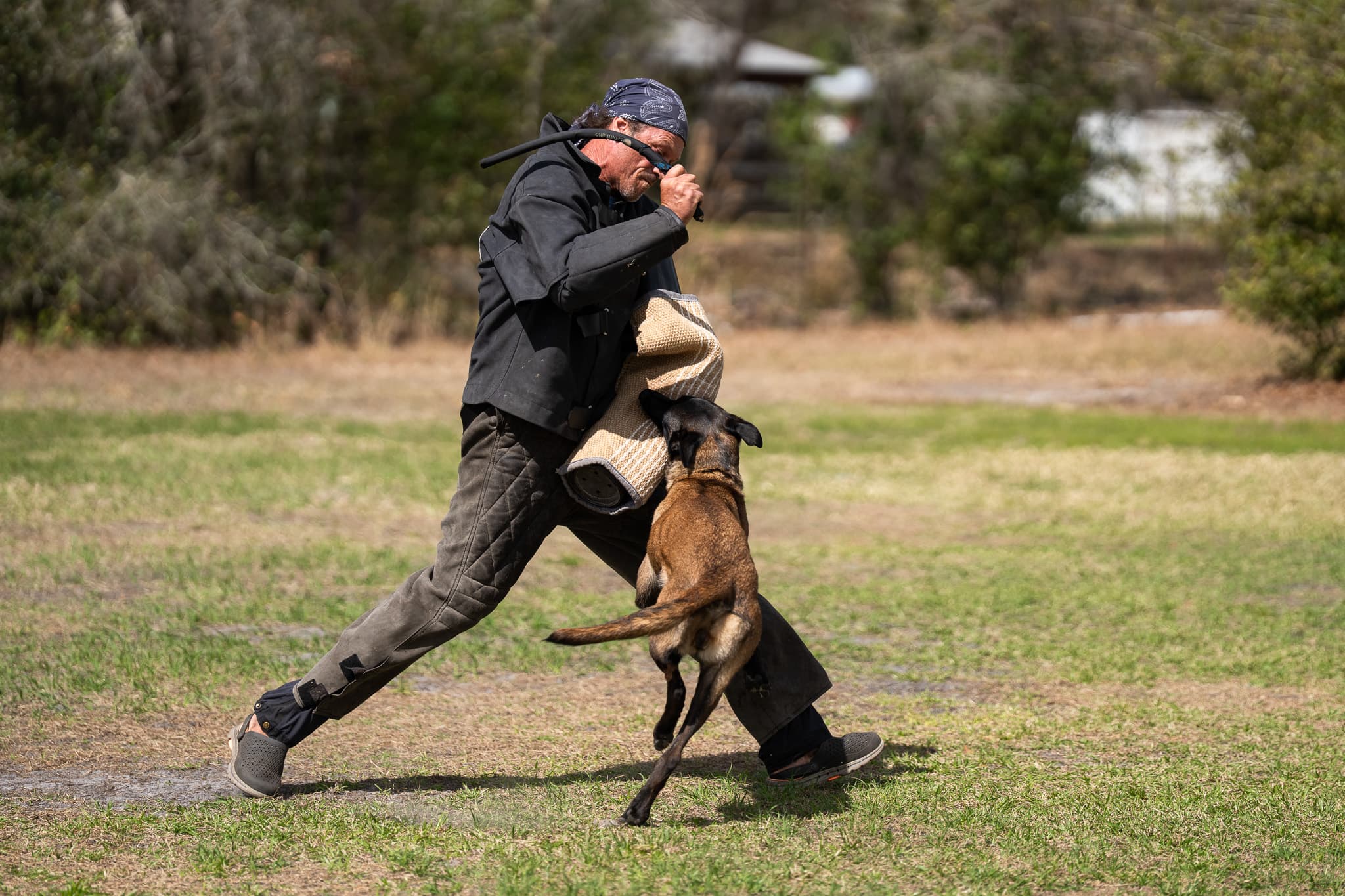
And here is the thing. Mueller preaches channeling that drive with fun redirects like games. With toys as the prey substitutes. Sure those can be part of it. They give an outlet, they tire the dog out, and so on. But simple redirects alone, they're not the key to real success. They do not teach the dog the full picture of what happens when they engage with the trigger. The breakthrough always comes from direct experience of the consequences of what happens if you, or in this case, the dog, chases. That's where we get true understanding and compliance. Even when you are not right next to your dog. I've seen it firsthand many times. And there is really a solid science that backs this up.
Also, just a year ago, we ran a study. We compared electric collar training using clear, immediate consequences with a pure force free approach on dogs who showed serious intentions when chasing a lure, just like car chasing. And to be clear, I'm not talking playful hopping around. The dogs were selected for this study. They had to be as intense as they came. We had 19 dogs that consistently chased. We split them into groups. They call our group 100% success. They stopped chasing after just 1 or 2 sessions and basically nailed it during the testing. The force free or the positive reinforcement only group. 100% failure rate. They kept chasing. No matter the conditioning, the reinforcement schedule or the different gradual setups. Why? Because rewards tried to lure dogs away from their instincts. But consequences teach them directly. This is a choice you're making. And it leads to this. And it's not worth it.
I know the people that are going to comment on this, so let me tell you, the study even checked the welfare. No long term stress differences between the groups. Just quick yelps from the initial punishment and the dogs ended up calmer overall after. There was zero sustained distress. Zero with all dogs in the electric group. So that's the difference between clarity and confusion.
For car chasing, start with structure. Manage distance to keep things safe. Sure. Reward, focus on you and stuff like that if you want to, but you have to mix those redirects and toys and search exercises. Flare, pulse, whatever you want. You have to offer a direct experience to the dog. That's where true learning happens. Tools like electric collars under expert guidance show real consequences for attacking. There is a direct association as to what happens if you charge at cars. I want to be clear. This isn't about punishment for its own sake. It's about giving the dog clarity through the full sequence of escape avoidance and basically learned control. It totally respects their biology, builds reliability off leash, and avoids the frustration of mismatched training that leaves dogs chasing forever. I saw this over and over during the study that I was just talking about.
Now let's take a look at Mueller’s predation substitute training. She claims it's not avoidance training, but then says it never works without the handler. She also says that she avoids putting dogs in tough positions. And to me, that's really avoiding the issue. Dressed up as some sort of management. But there is no actual learning. In behavior science, avoidance is part of escape avoidance learning, teaching the dog to prevent Issues, problems with predictability. Mueller’s version just doesn't work with dogs with serious intentions. Being wildlife or cars.
If a dog encounters a car alone, instincts are going to take over. And that's not addressed during the training Simone Mueller does. She does convince people, but that's not going to work. It is just containment. That's why predation substitute training is not going to work. It totally fails in real life. It does not prepare dogs. It just delays the challenge. Dogs quickly revert to chasing the moment the supervision drops. Real training needs to hold up when it matters.
Car chasing is not fear. It's biology and confusing it with emotions stops us from helping dogs. Mueller's refusal to engage, leaving her theory you know untested as a fairy tale. From the success stories that I've seen on social media, and you can see them, the dogs that I see there are not having predation problems. They're actual levels in this. You know, some dogs are just hopping around and some dogs have very different intentions. Like the dogs that she talks about, they have not killed anything ever. They have not even chased anything with the intention to kill. So dogs that show interest and curiosity towards another animal. Dogs that play chase for the sake of fun are not in the same category with the dogs I'm talking about. The type of success stories. Predation substitute training shows, you know, only misleads owners who have serious problems and need the results.
In case anyone wonders, serious predation can be and it is controlled. Many trainers across the world do work with such issues. So don't be fooled by pseudoscience. Predation isn’t fear, it's a biological drive, a thrill of the chase or a territorial stand has nothing to do with fear or panic retreat. So avoiding that challenge of addressing this issue because of the restrictions of ideology, that's not really training. That's not what most of us are interested in. It’s just management and it’s kind of delaying the inevitable unless your dog is always on leash next to you. But that is not the life we like to have for our dogs. Cars driving by don't charge or attack. They are not the threat that sparks fear as defense. Instead, their motion and intuition ignite predatory or territorial instincts. There is no need to flee.