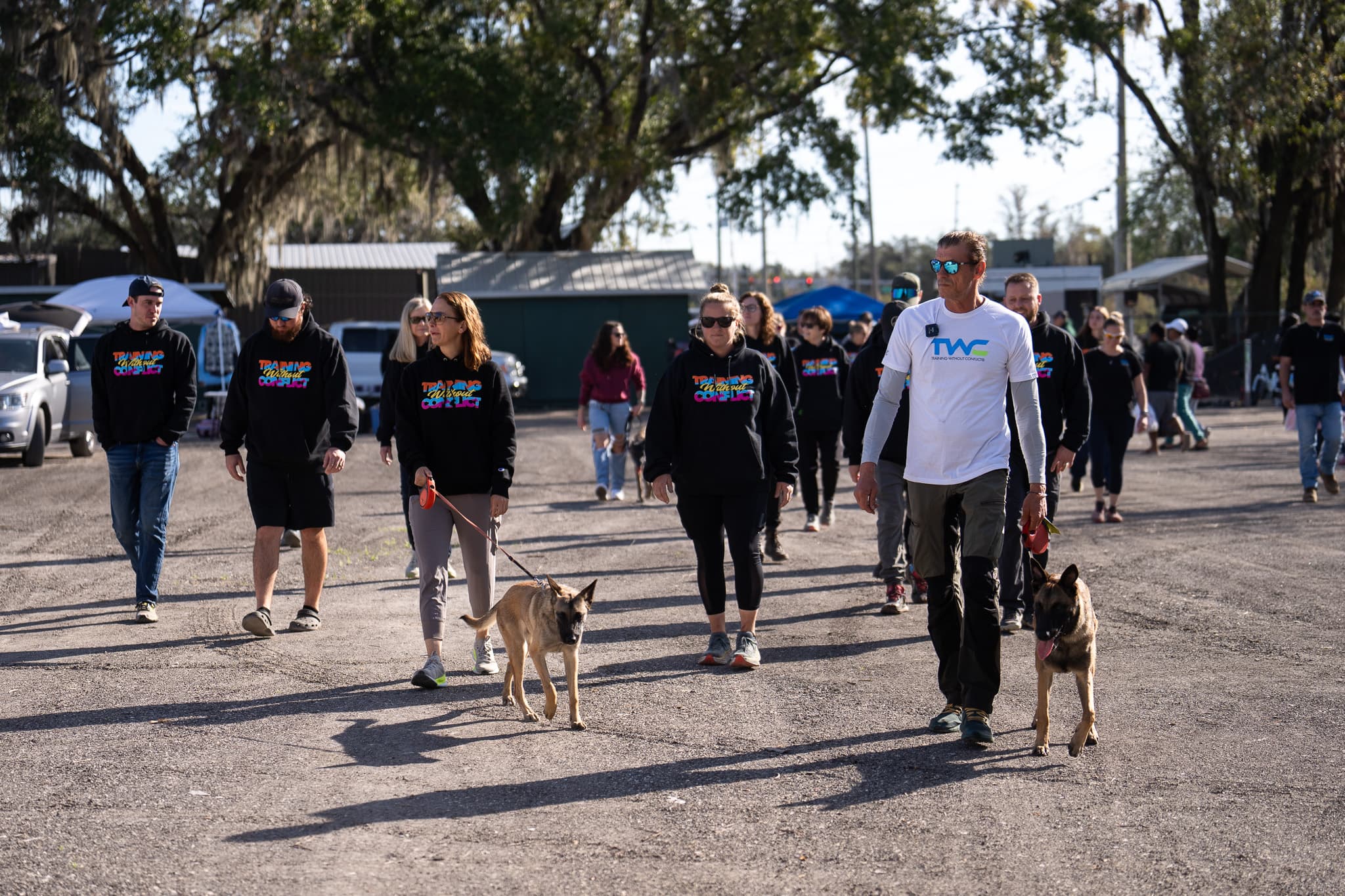
Alright, dog trainers, welcome to the Training Without Conflict podcast once again. The question: Should dog training be regulated in the United States? I've been asked this question over and over again. It seems like I talk about this with every guest on my podcast. I talk about it with my TWC graduates, my current students, my clients, and of course with many other trainers. It's an ongoing back and forth. It's always, Ivan, what's your opinion? What's your take? How do you feel about regulating the industry? So I'm going to give you my position.
The truth is that regulation could either improve the dog world or absolutely destroy it.
Everyone knows that right now, the dog training industry in the States is basically like the Wild West. Anyone can wake up tomorrow and decide that they're a dog trainer, behavior expert, aggression specialists, canine psychologists. And to top this off, we can add the numbers of followers and likes on social media that most influencers are paying for and consider it as credentials.
However, nobody checks anything. There are no standards. There is no accountability. There may be even no consequences unless a situation gets reported to authorities, such as animal care and control. And when it goes wrong, which we all know, it happens, the dogs pay the price and the owners pay the bill. So believe me, I do understand why people want regulation. I've been going back and forth on this myself. I totally get the motivation behind it. But let me tell you my issues with regulation. I don't think we are thinking this through. What kind of regulation is everyone actually asking for?
If regulation is built correctly, it could solve real problems. It could reduce fraud and abuse and incompetence, negligence and so on. And there are a hundred percent situations in the dog world, where regulation totally makes sense. For example, the amount of absolute nonsense being sold as science in dog training right now. It's unreal. People take a weekend course, put a bunch of certificates on the walls, add names, and letters behind their names, and suddenly they're giving advice for serious dog problems. And we know. We know that owners don't know the difference. They simply trust the labels. So, yeah, regulation could help produce misleading marketing, fake credentials, fake authority.
We cannot pretend that every board and train facility is professional...some places are great and some places are absolutely disgusting. Dogs sitting in crates all day, not being fed regularly, no supervision, unacceptable training methods, sometimes even poor hygiene or not to mention medical neglect. Many dogs die in such facilities.
Regulation could totally reinforce basic standards like this. Like safe housing, clean environment, access to food and water. Yeah, believe me. This is also a serious problem. Not allowing dogs to eat and drink. Minimum care requirements. Veterinary check up whenever needed. Documentations, of course. All that is totally reasonable. And of course it matters. Some trainers are taking on dogs with serious bite histories or predatory behavior, handler aggression, resource guarding. And they're doing that with no actual expertise, no safety protocols, no liability planning. So I think we all agree here. This is dangerous for everybody.
Regulation could require basic things. Again like I said, like safety standards, risk disclosure, insurance requirements maybe for high risk cases. So far it sounds great. Now here is where I'm going to say the part that nobody either wants to hear or talk about.
Most regulations won’t stay competency based. Instead, it will become eventually, if not immediately, ideology based. And if you don't understand what I'm saying, let me try to explain. Dog training today is not just about training dogs. It's also about politics. It's about identity. Of course, it's about ideology. And in that environment regulation will become nothing else but a weapon because once regulation is in place, the people who influence it will try to control what's allowed. And what's allowed will not be based on results or realism. It will be based on what someone believes is morally superior. So instead of regulating, instead of regulation being about competence and welfare standards, it's going to become about banning tools, banning methods, and punishment bans.
Basically, real training becomes illegal. And that's the danger. And it's very legit danger. My biggest problem with method based regulation is that it automatically assumes that one training ideology is always enough. It assumes that positive reinforcement alone is always sufficient. It's all we need. However, we know that the belief collapses the moment a trainer has to deal with high conflict behavior in the real world, especially when we're talking about stuff like aggression and predation and uncontrolled arousal, dangerous impulsive activity. Those that are willing to fight through different positive reinforcement schedules, those that are genetically designed to go all in whenever the situation presents itself.
When tools or consequences are removed, we don't magically create ethical training. We create dogs who cannot be reliably controlled in situations where control matters, and that leads not to better welfare, but instead endless management, constant restriction, passing dogs from home to home, to rescue, to shelter. And yeah, eventually, being euthanized is on the table. So in many cases, the people who push for humane only regulations end up creating outcomes that are far less humane. And that's the unfortunate irony here. Another problem with regulation is this: Regulation, most of the time, rewards someone doing proper paperwork and not the skill or the expertise of the trainer.
It creates a world where the people who succeed are the ones who can fill out forms, check boxes, and of course, play politics. Not the trainers who actually can read dogs, handle conflicts, build control, build confidence, stop dangerous behaviors, keep dogs stable and accountable and functional. So what we’re going to end up with is licensed trainers who still don't know what they're doing. Because being legal doesn't mean being competent. So yeah, the industry could become safer on paper while actual competence becomes harder to find.
Since you're listening to this, and you still may believe regulation could help, here is the only model I can support. Regulation must be outcome based and competency based, not method based. What do I mean? Let's regulate safety. Let's regulate facility standards. Regulate transparency and accountability. Regulate public risk.
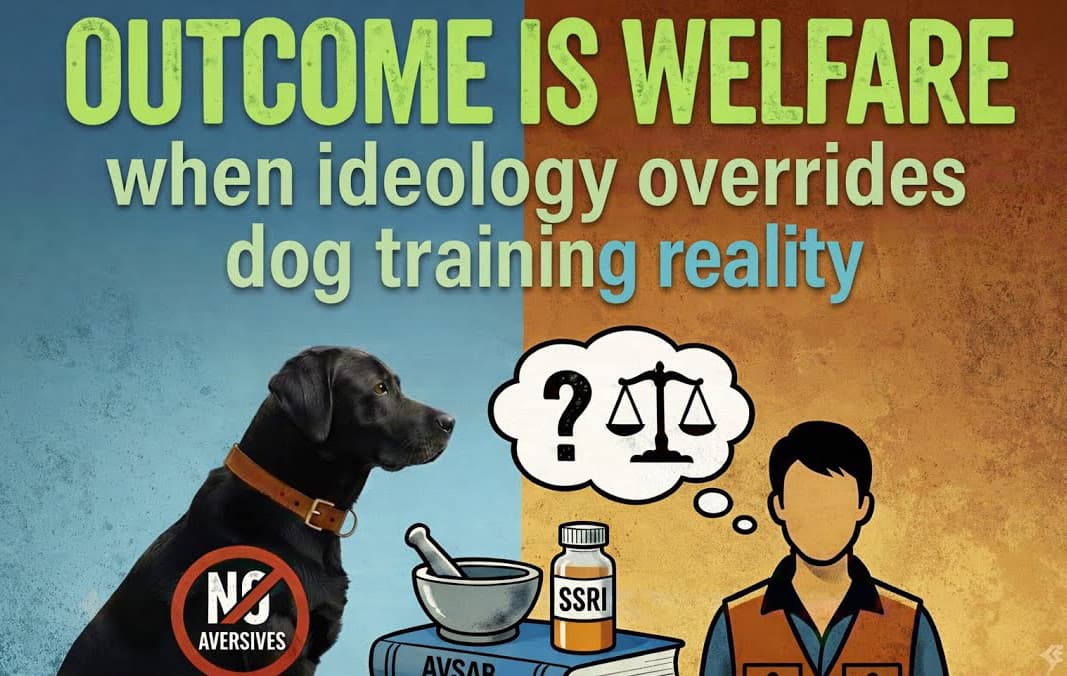
But we cannot legislate ideology. The dog industry doesn't need a government approved religion. We need real training, real trainers. That's what it's about. Here's my answer. If regulation means stopping abuse, stopping fraud, stopping the negligent facilities, requiring safety protocols, holding the trainers accountable for real harm, then yeah, that regulation would be good for dogs, owners, trainers, everybody. But if regulation means let's ban tools, let's ban consequences. Let's outlaw effective training because it makes some people uncomfortable. Then no. Like absolutely not. Because that won't protect dogs. That will actually do the opposite. They will sacrifice dogs. In another recent podcast, I challenge the AVSAB and their ridiculous position statement on this with real dogs that were going to be euthanized and now live happy lives.
Dogs deserve to be given the chance to succeed instead of being written off because an ideology failed to help them. The dog industry doesn't need more ideology. We need honesty. We need competence. We need accountability, that's for sure. It needs people who actually have the ability to take a dog with real, serious issues and bring it back into control. Clarity stability.
That's my position. So if you agree, share that. If you don't agree, that's fine too. But at least now you know exactly where I stand on regulations. Take care.