Hello, everybody. This episode, it will be only me talking. It's going to be a solo podcast. And obviously, you know the title. Electric collar, low level stim conditioning. A while back, I did a podcast. Unfortunately, that conversation didn't move forward. It kind of kept going into a circle and I was never able to express my concerns and point out the disadvantages that I see with low level stim conditioning. So that's really the main reason why I'm doing this one for you.
First off, I'm going to give you a little bit about who I am. My credentials. So you know why you should listen to me to begin with. Assuming that there will be people watching this podcast that will not be familiar with me and my work. So then I will give you brief explanations what low stim conditioning actually is and how it works.
I will give you my argument against low stim conditioning along the way. I will explain how it hurts the professional pet dog trainers also. Hopefully I can explain how the force-free community thinks about it, and what their argument is and why they want to ban electric collars in the country. Then I will tell you a little bit about how the e-collar came about, how the brain works, how the brain reacts to the electric collar. I will talk a little bit about activation and different variations of low level stim conditioning that people use. And hopefully I will be able to explain why I don't like using low level stim conditioning and why I'm not an advocate for it.
I'm sure eventually when we publish the video, there will be comments. People will talk. You know, something like, “Well, Ivan is not a pet dog trainer. He doesn't really - He's only a sport trainer. Or there is no right or wrong in dog training. Ivan doesn’t understand that the electric collar can be used like this or that”, and there will be comments like this.
So hopefully once I give you my credentials, what I have accomplished and what I do, at least some of those will not make sense to be posted.
The first thing I want to tell you, I am first and foremost a professional dog trainer. I'm not specializing in one specific area. I am a pet trainer, and I have a pet training business. I've been training companion dogs since 1998. That's like 25 years or so as a professional pet dog trainer. If you come to my facility at any given point, you will see 4 or 5 dogs in training. These dogs are typically I would select some very challenging cases, very interesting cases, not necessarily only aggression, but anything that is more challenging and interesting to me to work with and most of the time I would say these are dogs that either have been rejected by other trainers or have gone to other trainers and have failed and you know, they still need help. I feel that I could help and that's when I would take them.
We don't advertise like, again, as I said, the pet training side of my business is very busy and we take only a few dogs, so there is no point in me advertising. But for those of you that think that I am a sport trainer or a malinois person or whatever, you want to, you know, that's really not the case.
In the early 90s, for about five years, I worked as a guide dog instructor in Santa Fe, California trained golden retrievers and Labrador Retrievers and German Shepherds, as well as, of course, instructing the students and so on. So that's another big part of my dog training that I learned a lot during that time. After being a guide dog instructor.,
I was an animal behaviorist at the San Francisco SPCA in California, which means that I was responsible for evaluating and accepting dogs in the shelter, making a rehabilitation plan and ultimately placing them successfully back in the real world. I also started, dog training academy for dog trainers in San Francisco, SPCA, which later Jean Donaldson took over and basically changed everything and did it all force free which is what she does.
I worked there for maybe 6 or 7 months together. I mean, not together, but we coexisted somehow. Eventually the San Francisco SPCA took off in a direction that I really didn’t like, and kind of forced me to leave that job and go on and do other things.
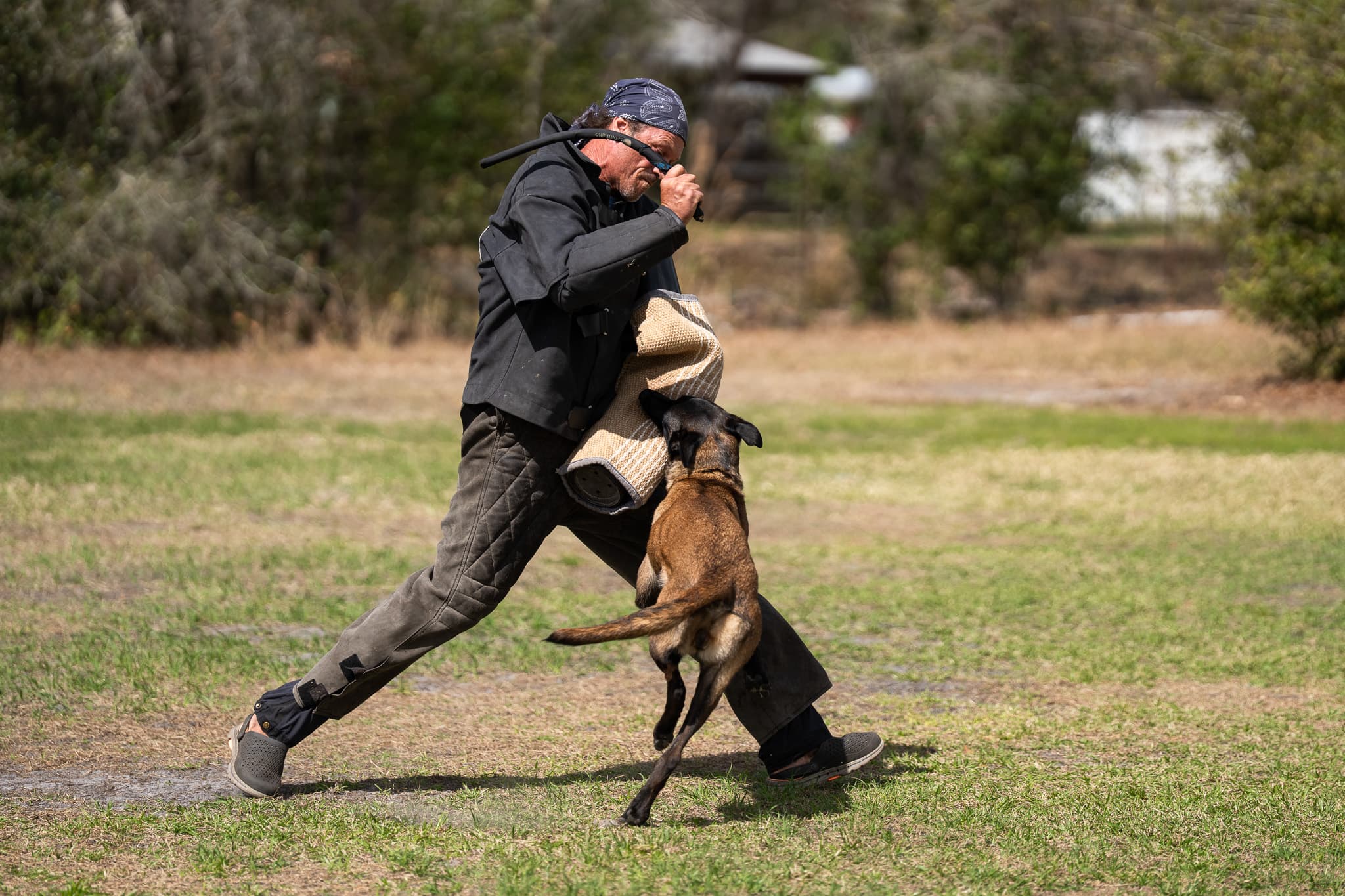
I am a malinois breeder. I've been breeding marlin since 1989 under the kennel name, Ot Vitosha. I have competed in many different sports, including agility. My biggest sport accomplishments come from the IGP, also known as Schutzhund or IPO. I have won the national championship 15 times, including last year I won the DVG National championship. I am a two time world champion. I have been the vice champion of the world. I have been, maybe, I don't know, 4 or 5 times more in the top ten of the world. I have participated being part of the American team at the World Championships 25 times. Now, all this may sound like bragging, but, later in the conversation I will point out why you need to know this.
I give seminars, I give presentations, lectures all around the world. In fact, it will be easier for me to tell you to name the countries that I have not been to than naming every place that I have presented, made my presentations, or given seminars. I teach search and rescue teams, police departments, Army Special forces, sports ring, PSA, IGP, AKC obedience, any aspect of dog sports, any areas of dog sports.
So I have a well-rounded knowledge and experience in dog training.
I can go on. But if you need to know more about me, of course you can follow the links and go to my websites and social media and you're going to find out more. The last thing that I want to mention, and I'm a little hesitant because that's not the point of the conversation, is that I have a school for dog trainers training without conflict, and it's a very successful school. That's kind of, you know, a preoccupation that takes a lot of my time right now, and I totally enjoy it. But again, making this video is not about me trying to convince you to come to my school. It's simply to point out the disadvantages that I see with low level stim conditioning.
There is also a big chance that if you’ve been training dogs for a while, you're using something from my concepts like you've picked up something maybe not directly from me, maybe from a book or a video or from another trainer, but if you trace it back, there is a high chance that it might be coming from my concepts.
As I said, I've been doing this for quite some time and I've been very successful. I have taught many of the, currently very, influential dog trainers as well. I'm not telling you all of this as, plug in to subscribe to my stuff, go to my school and all that stuff. The reason I feel I had to is simply because people are so easily fooled on the internet, especially social media.
People don't do their homework. And mostly rely on the number of subscribers and likes to channels to determine which trainer is credible and what source they should subscribe to. It's unfortunate, but the truth is that popularity on social media has nothing to do with actual expertise in the dog training field. And there is one more thing that I forgot to mention.
It's really not intended to be an attack to anybody. I somehow feel that the dog training community is divided into many different camps. It's not just positive and balanced or whatever we want to call it, but there are just way more fractions. And we are, for whatever reason, not able to talk honestly, have conversations about dog training and express concerns because we feel that that will be a direct attack on somebody.
And really, this is not the point of that podcast. The fourth reason is another big one for me. And this is just because I am successful as a dog trainer. For some reason, people that have not worked with me, that have not really, heard me talk or or seen me train. They believe that I am also using low level stim conditioning in my training. No, like I don't do that. And it's important for me to make sure that anybody that thinks that, “Oh, Ivan is successful. He's doing so many different things. He must be using low level stim conditioning because it's the modern way. It's the humane way of using an electric collar”, and that's not necessarily the case.
So no, I have never used low level stim conditioning. I don't like it and I will explain why. Having said that, you might think that now I am just blasting dogs off in the stratosphere. And I am one of those other trainers, bad trainers. And that's also not the case. This is one of the sales pitches that low level stim trainers will have. They will always point out to all these bad trainers that use the collar in a certain way, on a very high level. And the dog is not prepared and it freaks out. And there are many negative blow backs and stuff like that to where the low level stim conditioning, on the other hand, has this very methodical way of teaching, conditioning and preparing the dog for that comes in the future.
And hopefully I will be able to make a good case why that is not true. In my opinion, I think both are extremes, and they are both not helping the dog training community at all. The modern electric collars have come a long way. I still remember the times when the first electric collars came about. They were very rigid. There were very limited options to control intensity and so on. Dog trainers also didn't have the knowledge that is available right now, but nevertheless, everybody that used that so that there is some future there, there were some clear benefits. It's just that the tool was not that refined yet.
How the low level stim came about. It's interesting because there are two reasons. One is the force free community. The force free community is very much against the use of electric collars, period. They consider it a cruel, inhumane and unethical dog training tool. They believe strictly in positive reinforcement and some form of negative punishment to train dogs. They believe that that's all you need to do to be able to train a dog.
Now, this is false. This is a mantra that they keep repeating. But that's really not the case. This is a whole different conversation that I am willing to have. But anyway, low level stim conditioning trainers, they felt that they can present the electric collar in a way that is going to be accepted, that the force free trainers basically want to say, “oh, this is actually not that bad. It's not what we thought it was.” So they would, I'm sure if you're a low level stim conditioning trainer, you'll preach the talk. And it sounds something like, “well, it's only the feeling. It's like a tickling. It's not, you know, we don't use high levels. It's. You can barely feel it. And there is a working level and it's a very, very mild discomfort. It's a communication tool. It doesn't hurt you know? And when it's done correctly through that low level stim conditioning, it actually prepares the dog. So, there is not really any negative blowback. Like, if it's done this way.”
Now, all this sounds really cool, but it doesn't work. Like, because you say that - because you talk like that to the pet owner or to somebody that it's against the use of electric collars. I don't see how you have a good case and how you defend the electric collar. I think you actually do more damage than good. And one of my concerns is that because of the low level stim conditioning trainers.
They give ammunition to the force free community to ban the collars in our country as well. In the United States. And hopefully we can change that.
The low level stim conditioning trainers have one more argument, and this is always pointing out to those old school trainers, those, primitive trainers, that blast off the dogs in a very high levels and don't understand markers and reinforcement and you know, it’s just kind of talking salad really but it's very it works to some degree at least.
You know, they succeed to convince quite a few people because it's like, well, no these are the bad people, but we use it in a very different way. We use it as a communication tool. We prepare the dog, we use a working level that it's low level and so on and so on to where those people, they are barbarians. They use a very inhumane approach and they are very cruel to the dog. And they are the reason why electric collars are banned. So I think both extremes are not helping. And since I'm talking about low level stim conditioning, I want to make sure that, as I already said, I do not like it. I do not use it.
But that does not make me immediately one of those other trainers either. Like, we have to accept the fact that just because you are not in one camp, that doesn't put you immediately here. There are many other options. There are many other choices. But this is not even the point that I want to make.
I'm not here right now to teach you how I do. I'm here to explain why I don't like something. There is a difference. I should be able to talk openly and freely about what I don't like and give you a good reason. Make, you know, express my concern clearly so you can understand them. And you take it or leave it. But that doesn't mean that I have to teach you how I do it at the same time, a different way. That's again, it's a very different conversation that we can have.
Low level stim started in the hunting community. The hunters are, in a lot of ways, the masters at the time when the electric collars came around because the dogs can wear the electric collar at all times, they can use and have control in a big, different, long distance. And there are, of course, competing reinforcers. There are ducks and birds and rabbits and whatever the hunting dogs do. So that's how it came about.
There are several different variations if you want to call it that way. You know, there are certain schools like Martin Deeley which was, British guy that was a very good dog trainer and a really good person. He was one of the very first ones that started to kind of sell the idea of low level stim conditioning to trainers beyond the hunting dog community. Now, I don't want to give you names. You know, everybody that does low level stim. And if you don't know them, it's not that hard to find. Now you have social media. Of course, anybody that is not familiar and wants to learn, at least make an effort to learn first hand. Go to the actual source of the concept of the method that you're learning.
Learning from third or fourth person down the road is a bad idea no matter what you're learning. Like, not to sidestep too much, but I know it first hand. Like there will be people that have been to one of my seminars or know somebody that knows somebody that has graduated in my school or something. And now they think that they train and understand my concepts and it's just, it's laughable. So if you ever want to learn more, try to go to the sources. It's not that hard. That's the best way to learn.So that hopefully explains why low stim conditioning has, it's popular in, in at least some dog training circles.
It's the misrepresentation of “oh, well, it's only tickling. It's a communication tool. It prepares the dog.” That's the conversation they will have with the force free community. That's a conversation they will have with pet owners and so on. And of course, they will point out they will never forget to point out how those other bad trainers are doing really bad things right. And once again, I'm not making them good trainers. I'm not justifying what they're doing. It's clearly not a good approach, but that doesn't make low stim conditioning a better approach. I think they're equally bad.
When you are in this circle of dog trainers, you’re almost gonna end up believing that this is the norm, that this is really the like, if you're successful, that's what you need to do. If anybody is successful, that's what they do. And it's like there is low level stim. It's this secret that's been kept for a long time and it's not a secret. It's been around for at least 20 years. It's nothing to do with being modern or humane. And again, I will make sure that I explain myself on that. Most knowledgeable dog trainers that use electric collars do not necessarily subscribe to the low stem conditioning narrative. And if you're in a circle too, where everybody around you is using it, that's okay. You can believe it. But at least have an open mind. Listen to what I have to say. Listen to what I ask other top trainers. Hey, do you use this system? Do you value low level stim advocate? Find, ask questions, go around.
People will openly tell you if they do or they don't. They may not have to explain anything about that, but they will definitely tell you there was a time like in I think it was the 60s or so, doctors were making advertisements for cigarettes. Yeah, doctors were making advertisements for cigarettes And if you were sick and you're in a hospital, actually the nurse will come with packs of cigarettes and have you pick one. Which one you want to smoke because they thought that that's good for you. The reason I'm bringing it up is because things are changing, you know, don't get stuck stigmatically into something.
So let's talk about what is low level stim. You put a collar on, you go from zero, start increasing the intensity and eventually as you watch, you will see the dog's body language. The dog is reacting in some way to that level of, you know, discomfort or just getting its attention. This is kind of why we can argue this is not necessarily clear. Some dogs can be much more sensitive. Some dogs may not be as sensitive. You may reach a level that it's discomfort, or you may reach a level to where it truly is some form of tingling feeling that is like, well, I'm feeling something, but I don't consider it necessarily good or bad. Then, let's call it some mild, very, very, very mild discomfort. Right. Unpleasantness. What happens next is you give a command and at the same time you press the button and the dog makes the command, you release the button. And of course, you can reward. Make sure that you reward. That's where low level conditioning trainers get very defensive. It's like. No, but I also rewarded the entering for sweet treats or whatever, and I used the clicker and so on and so on.
Yes, you do. With every command you say you press the button, every command you say you press the button. The moment the dog performs the command, you release the button. Now, as I said, there are different variations. There are certain different schools. So some will teach the behaviors in advance through positive reinforcement. And then they will introduce the electric collar. Some will do it at the same time as they're teaching the behavior. They will introduce the electric collar. We can go down that rabbit hole and discuss which one is better and which one makes more sense. But there is no point in doing this. This is when you pick the better option. And we start with that and we go on.
You teach the dog to go away, you teach the dog to come back. And you're using the low level stim. It's debatable. Now, you can say you use it for two days, or you use it for a week, or use it for three weeks, and eventually you make the decision that now the dog is prepared. Now the dog understands how to work with and around that feeling, that electric impulse. Now it's prepared, now it's educated. Therefore, we can now increase the level to where it's clearly unpleasant because in order for the electric collar to really do what it's supposed to do, it has to have an unpleasant feeling. It has to go like, well, I don't like to touch this. I'm gonna move my hand away. Right? That's the motivation. That's the negative reinforcement. If you want to go technical and use terminology.
So at that point, now the dog experiences a different level, right. And my first argument is that all that preparation, so-called preparation and education really didn't teach the dog anything about how it's going to feel. What is the level of intensity? I am really going to try to avoid giving you too many analogies, because there is always something that somebody is not going to make sense of it, it's not going to click for you, but if you take a classic example of the hot stove.
The stove is turned on, but you can keep your hand as long as you want. Yes, it's a little bit different than the room temperature, but it's definitely nothing to worry about. Nothing will happen to you can keep your hand as long as you wish. Now, after a month or a year, we dial up now. The stove is hot. Now you. If you touch it, you go. Whoa! I cannot keep my hand there. So my argument is that if you keep your hand for as long as you want to, and you know that it's a little bit warmer than the room temperature, that really does not teach you how hot it can get.
The true learning experience happened when you touched it, and it was unpleasant enough that you basically said, whoa, I better not do that. From that point on, that was a very different chapter of the book. That's a very different learning. And everything that you did prior to absolutely did not prepare you to know that, oh my God, that feels...that can really feel this way.
Now, one kind of I wouldn't say silly arguments, but you know, the low level stim people will defend and respond to what I just said is that, well, “but at least now the dog knows how to respond to it. We have prepared.” And this is not true. And I will tell you why it's not true, because there is a fundamental biological programing. It's a lull in our planet.
Everything like humans, dogs, horses, fish, a single cell organism, anything that is alive on our planet is genetically, biologically programmed to approach something good and to avoid something bad, something unpleasant. This is not something that you have to learn through experience. What you learn through experience is that that specific thing can be good or bad, but how you react to something good and how you react to something bad.
It's a biological program for all of us. So when you touch the hot stove and it was hot and you moved your hand, your brain told you to do that, it wasn’t, something that you had to learn through experience and education. Okay. Because anybody again, even like the single cell organism that tried to disobey that fundamental law, ultimately it is nonexistent.
They died. Like, if you disrespect this, you will die, right? That's how simple that is.
The way the low level stim conditioning will defend their approaches, they will say, well, the electric collar the electricity itself is so foreign to the dog that if we just use it, the dog's not gonna know what that is and it's going to blow up and it's going to freak out, and you're going to be one of those bad people that you don't want to be.
Again, that's a sales pitch. It's a good conversation to have. But it's unfair to think this way. Just as I told you, you approach something good, you avoid something bad is an electric impulse. Is it the hot stove? Is it a needle that you get poked with?. You will respond very much the same way. You're not going to necessarily say, well, this feels very foreign to me. No, you will just say that’s unpleasant, that's discomfortable. My brain commands me to stay away from it. And that's that's the bottom line. That's what is important. So if you believe that because of all that low level stim conditioning, you're actually educating the dog ,”Hey, this is electric collar. This is an electric impulse. Don't be afraid. Don't panic.” It's a very illogical thing to do. And it's very, I really don't recommend anybody to talk to their clients this way because that's nonsense. It really is nonsense. If you want to go even further and deeper into this electric impulse, it's not that foreign to anything that is alive.
Like just the fact that I am moving my hand right now, that happens through electric impulses. You know, there are these neurons that communicate and just talk to each other and everything happens with electric impulses like, I might very well just rub my hand here and then touch the cup and get a static. Electricity is by no means that foreign to us.
On top of what I said, even if it was your response, I avoided it because my brain tells me that it's not good because I am programmed to avoid something that is unpleasant, something that is discomfort. If you go that route to teach the puppy or the dog and say, “hey, let me show you electricity, how it feels, and you go from zero.” For the sake of the discussion and the conversation, let's from now on, imagine that we have our electric, all our remote control that goes from 1 to 100. And one is obviously something that even if you concentrate deeply, you most likely will not feel anything. And so you start with that low one and two and three and you go up very gradually higher to where there is the tingling, there is the, you know, all these different feelings and you're educating the dog about what electricity means.
I can put a collar out on you and I can go to level 50 and you will jump away because your brain is going to tell you, get out. But if I do it very gradually, or if I do it several times, I go one, two, three, four, five and you get to experience it gradually you're actually going to be able to, go much higher than the original 50 that I just mentioned. What does that do? What do we do to the dog if we educate it in such a way?
One of the things that we do is we create low level conditioning. People will say we are preparing the dogs so we can communicate later with the tool. And we are basically habituating the dog to the feeling of the electric collar. And throughout that process, there are a few things that are happening. One is we make sure that the dog starts to understand and it's not on purpose, want it or don't want it. Ultimately, the dog will start to understand that those electric impulses are coming from you. They're not just happening. It's not like God out of nowhere just gives them some aversive. They will start to understand, because you give a command you use the collar simultaneously, time after time after time, session after session after session. It takes very little time for a dog to be like, okay, I know. Yeah, I got it. You have this magic distance control over me and I can feel some discomfort.
Now, if we do that conditioning this way. When we decide to use the electric collar to stop, to suppress undesired behavior, something that's. I don't know, dangerous to the dog itself or to the danger to others, or just some undesired behavior that's just you don't want the dog to do, and you'll want to use the electric collar to suppress. If you have done low level conditioning, that means that you will have to use a higher level than the normal level that you typically would have done if the dog did not have that low level stim conditioning, that preparation, that education.
I talked briefly about this in my other podcast, so I'm going to mention it here. Again. Experiments. There's plenty of studies, but you don't really need studies. It's very logical like there's times that studies are done just to confirm something that is already very obvious. But here is one of them. When you, you know, most studies imagine you have mice, you have a maze and you have cheese.
If we have this little metal plate that we can deliver electricity to in the beginning of the maze so as the mice or the rat goes through, touches, walks over that metal plate, feels that little tingling, goes all the way, finds the cheese, eats it, gets reinforced. In the next repetition, being the very next round or after a certain time goes by or the next day. But with that electric plate, we can increase the intensity very gradually. So if we increase the level, what happens is the mice kind of feels it a little more than tickling. It's clearly a little bit unpleasant but goes through and gets the cheese.
They keep increasing. Every time they let the mice go. They keep increasing the level of intensity and the experiment basically is to see what it will take to stop from going to get the cheese. So what they found is that when it's done so gradually, the mice become more resistant. It kind of gets conditioned. It gets educated to overcome the discomfort.
The intensity gets higher and higher. And now when the mouse goes, it clearly is in pain. It's not even discomfort. It's not unpleasant. It's actually you see it's screaming and jumping and but nevertheless, because of all that prior experience, it believes in itself. It's self-confidence. Like “I can overcome this. I always beat it.” So makes a leap and goes and gets the cheese again. We said from 1 to 100 levels of intensity. So let's say they keep going higher and higher. Ultimately they reach a level. Let's assume 80 to where the mice say, okay, this is too much. 75 was painful. But you know, I, I pull through, but this I just cannot do any more.
Now here is where it gets interesting. They have to do the same experiment with a brand new subject. A new mouse comes that has not experienced electricity. And instead of gradually increasing the intensity, they say, what about we just start with 40? It goes in, gets surprised and goes, whoa and never wants to go forward. It's plenty.
Lesson learned.
The point I'm making is that if you use that conditioning and you decide that you want to suppress the behavior, you're ultimately gonna end up using a much higher level than if the dog is not educated, it's not prepared. It's not habituated to the collar. If it's not, then a much, much, much lower level is needed to accomplish exactly the same.
You can ask yourself, as a pet dog trainer, which one you want to do? Of course there will be an argument. How this makes you more resistant and more determined to go through the aversive can be beneficial, but I will get to that and also see if I can convince you that that's a bad idea as well.
For pet trainers remember, when you work with companion dogs, you have your client. You know, sometimes they come to do basic obedience. But I would say most likely the chances are that they are coming because they have a problem. And depending what the problem is, we need to try to stop the dog from doing something basically. Right? As a dog trainer, something that it's again either dangerous to itself or others, or it's very inappropriate behavior and it has to stop, or the dog has to be, going to the shelter or put down, who knows? That's reality, right? That's the dog training profession.
Here is a big disadvantage. And even just this one right now on its own in my opinion, is sufficient enough to where any pet trainer will not use from here on low level stim conditioning. So here it is. Let's assume that we have two dogs. One is conditioned, habituated, prepared. It communicates with the collar and one that does not. Both dogs have the same behavioral problem. So let's pick what let's say chasing cars digging holes in the back yard. They're both undesirable behaviors. One of course chasing cars has much more dangerous consequences than, you know, making a mess in the backyard. Although you wouldn’t be very upset, still the dog is not gonna die.
But anyway, so let's say these two behaviors. Or you can pick whatever. Imagine whatever you want that you want to try to suppress, right. The beauty when the dog does not have prior experience with the electric collar. Is that we can create a setup where the dog can have a direct association and learn something. As we said this, I avoid this. I do not like doing so. If he chases a car, and we put the electric collar on for a few days prior to. Then create a setup and show. Have that dog experience that the car can actually bite him back, so to speak. And when we use an appropriate level of discomfort to where it's not like, oh, this is no, I that that was so stupid of me to do. I don't think I want to do that again.
There is something in learning theory called single event learning. I'm sure all of you probably already know, but one thing that I want to mention about single event learning is, even though it's called single event learning, it's very, very rare that it's a single event. Typically, to be successful, you want to do that a few times.
We make a few setups. The dog confirms that chasing cars is a bad idea because chasing cars can turn and bite him back, and ultimately it's not good for him or her. Now, when we put the collar prior for a few days, then we use it, then we keep putting the collar after for a few days. Now the dog cannot really say oh, this is because of the electric collar. No, it only happens when I chase cars and the collar cannot make the association to where when you do that low level stim conditioning very quickly, the dog understands where it's coming from.
With the other example, let's say it's digging holes in the backyard as he gets really into it head it's all the way down. And next thing you know, the boogie monster comes out of the hole and bites him back. It happens a couple of times. The dog most likely will come to the conclusion, you know, digging holes in the backyard is a bad idea. There is the boogeyman there. The monster. I don't do that. It's not good for me. It's very logical. Right? If you have already conditioned. We lost him. And you do the same thing with the car or the holes you're going to need, first off, much higher level. And second, it will work. You will suppress it for the moment. But do you actually solve the problem? You may or may not be able to. Why? Because direct association between the activity and the hole the chasing and the car itself is not made.
They understand that they are not supposed to do digging because you don't want them. They understand that they are not supposed to chase cars because you don't want them. Sometimes in dog training there is a benefit of that. But in the examples I'm giving you, the ultimate is that the dog interacts with the car, interacts with the hole whatever it is, and understands that that's a bad idea and that the hole there is somebody there, the car can turn around and so on and so on. Like a puppy biting on an electric cable. Yes, you can do all sorts of things, or you can say, you know what? The electric cable can bite you back and lessons learned very fast, very easy.
And once again. Just because it's a puppy, you use the right level of intensity. And this is again, I'm not trying to teach you all about dog training. This is not as easy as I'm describing it. But anybody that does low level stim conditioning hopefully can make sense of what I'm talking about. That puppy that's going to bite the electric cable, it does not need to know how electricity feels. It does not need to. All we are using is biological programming. You avoid something unpleasant. Yes. Chewing on a cable. Bad idea.
There are always dangers. And if you as a trainer want to fix, resolve, suppress an undesirable behavior, you have to leave it to that. Now if he's going to chase a car. But then you say, well, but now I'm going to punish him for chasing the squirrel. Now I'm going to punish him for chewing the shoes. Now I'm going to reinforce it negatively to come for a recall. That's not going to work. That will not be a smart approach, because in some way, what you're doing is a different form of what the low level conditioning is about. You are educating the dog, hey, there is this thing that I can do and I can control you in so many situations.
So what I teach and what I do at my school, when the trainers come, I specifically say if there is a serious behavior problem, then you leave it - The collar and that electric impulse only associated with that problem, let that be resolved. Let that sink in. Let's make sure that this is done for once and for all. Then later on, feel free to introduce the collar and work in whichever way you want to work with. But don't rush and don't - just because you have this remote control, “let's start using it everywhere for anything we want.” That's a bad idea.
That whole spiel, that whole beautiful conversation convincing the force free or the pet owner how it prepares the dog, how we are so methodical and we are using this system and so on. What the low level stim conditioning people don't realize they are doing as they presented in such a way is if you're talking to somebody that never really used an electric collar before and you present it like this. “Well, we prepare the dog, we educate it. It's a tingling feeling. It's a communication tool. And once it's prepared, then if we use it on a higher level, the dog knows how to respond and so on and so on.” It gives the pet owner a green light to use that tool all over the place, just because now they think that, well, the dog is now prepared. So “I have a green light. I cannot ruin my dog anymore.” It's very dangerous waters. It's such a bad idea.
And as I said, I do see this. You know, pet owners that have done electric low level stim conditioning, they overuse it and they use it all over the place. And the reason they do is because they are made to believe that now the dog knows how to and has become resilient, and it actually makes it even better. And we're going to talk about this further later on when I start to talk to you about competition in sport dogs.
The force free people, the positive, only the animal rights. The main reason the electric collar is so… There's so much against it.
It's not what you think. I talk. I go everywhere. This is what I do all the time. The main reason for the electric collars to be banned in European countries, and the main reason that they want to ban it here, the main reason is overuse. It's not that one incident with that one crazy person that did the most horrible thing to a dog. I'm not again approving of that, but that's not the main reason. The main is the overuse of electric electric electric electric, electric electric and trying to justify it as the dog is prepared and needs to communicate. And it's resilient. Anybody that has a little bit of knowledge of what is going on. Will disagree with you, no matter how smart you are going to present the low level stim.
Overuse is a big, big problem. And it's a problem for the dog. Of course. You know, like we know so much more about how to convince a dog to do or not to do something than just going with that remote control all over the place for everything and anything.
The conversation you want to have when you talk about electric collars. I would first explain how the electric collar even came about in dog training and what that is. It was a long time ago, more than 100 years ago, when studies were conducted in the laboratories with all sorts, animals, pigeons, rats, mice, dogs, whatever. And any time they were studying aversive - the use of how the animals respond to aversive. They had to do something physical to those animals like, you know, poking them with a stick or doing some air puffs in their eyes or whatever they could think of. And that was very problematic. For once. There were a lot of injuries, and even at that time, that was not something that everybody was looking forward to when they went to a laboratory to do studies.
So physical injuries were one thing. That was a serious issue. The other one was that it was very difficult to have consistency in their experiments. You know, like if somebody pokes, they can poke with certain intensity, and the next day they have to do it, they will do it probably a little bit less or a little bit higher. On top of that, if somebody else has to do it, then it's going to be very different again. So the consistency of how the aversive is delivered, what is the intensity level? That was a big, serious issue. And studies were very difficult to replicate to be peer reviewed. So ultimately eventually the electricity came into place because first it was safe physically.
There were zero physical injuries from that point on. That's a big plus. And it's very controllable. If the intensity level is set on level eight, then no matter who pushes the button and how they feel, it's still going to be level eight. In a nutshell, that's kind of how it all started.
Eventually we moved into dog training. When I explain electric collars, one of the ways I talk about it is that, of course, you know, depending who you talk to, and I suggest that you study a little bit because it's important to understand how it actually works and why nobody can die. But in everyday conversation, you don't necessarily need that. There is, you know, what 's taken under consideration is the electrical potential, the current and the power. And, basically the various relationship, between the voltage, the resistance, the amperage and open and closed circuits, the Ohm's law and so on. I just happened to graduate from a school where I studied all that stuff.
But again, what we really need to know about electrical power, in a simple layman's terms, is that it's localized. And when we talk about this 3000V, that really doesn't mean anything. It depends, again, as I just said, like if it's a close or open circuit, if it's being what kind of relationship between the current and so on.
Like, for example, if you just go like this on the carpet, you will go probably even more than 3000V of static. When that impulse goes through these two probes on the collar they go from point A to point B, so it's very localized. This is important. It's not going to travel to somebody's heart. It's how some of the force free communities try to really scare the hell out of you. And you picture one of these with the lightning strike through your body and you're dead. That cannot happen. Can the electric collar do damage? Yes, it can, but we have to be reasonable, and we have to make sense of what we are explaining.
And this is what I have the problem with, again, with the low stim conditioning trainers, because they really misrepresent how the collar works and how they use it. And it doesn't make sense. And people understand that it doesn't make sense. So there are plenty of these awkward situations. And it's, you know, you need to be honest when you talk about it.
The beauty or really the way that it works is that it's, if you want to think of it as a false alarm that sends to the brain. So basically, that impulse, the brain recognizes this as a danger. If you go through the low level conditioning, you can explain to the brain that, okay, it's not really that dangerous as you think. Get used to it, feel it, it's okay. But this is not the point of the use of the electric collar. We want to use it as something, “oh, I need to watch out. I need to avoid it. I need to escape it” instead of “that's not a big deal.” This is the only tool that we can use and have that fake illusion, that fake emergency in the brain without any physical injury, without any mental issues, nothing.
This is the beauty of the electric collar. And when you use it correctly, being to suppress something or to encourage something to happen, you can do it in both ways. Now, I don't want to go and teach you how to do all that because that's again a very different conversation. But this is, in essence, why the electric collar is so beautiful when you, when you need to use it in situations, it's because it triggers a response, but it's actually harmless when used correctly.
Just like with the low level conditioning, if we want to, I can go from dial to dial to dial and slowly, make you feel more comfortable to where you will be looking - you know, you can feel the tingling. Next, you know, you may see your finger, your pinky kind of contracting the muscles, not necessarily being afraid or anything. And eventually it can go higher and you're more accustomed, you're getting habituated, so you're not freaking out. Now the question is, do you want to have that response of, oh, I want to avoid, oh, I want to escape? Or do you want to be habituated? And you want to say, oh, I don't care about it. And if that's the case, then you have to use much higher levels later on. And that's, that's what I have the problem with.
Just because we have that really, really modern equipment talking about the electric collar, that doesn't mean that we have to use it for everything. There is no shortcut to becoming a really good trainer or going to be training a dog to perform to its best. If you think that that electric collar is some kind of magic wand that's going to create this and compensate for the lack of knowledge and lack of understanding how to work with the animal that's not going to happen. Actually, things will go ugly and and yeah, that's what we see all the time. And that's where the problems become serious. There's definitely no shortcuts to excellent training. You need to understand how to motivate a dog.
Focus on the things that are important. Don't believe anyone that tells you that there is this magic wand. And you can create this super dog because of that, in some ways the electric collar makes things easier, but we certainly can train dogs without electric collars. The problem would be, just as I said with the experiments of a hundred and so years ago. If we want to apply some aversive, then there may be more opportunities for injuries. And this is going to be the problem. That's what we're trying to avoid when we use an electric collar.
Here is something interesting that a lot of trainers just are not aware of. Even in Europe. As I said, and as you know, quite a few countries in Europe specifically have banned the use of electric collars. They consider it dangerous, inhumane, unethical and so on. Switzerland was one of the first countries. Switzerland is very, force free right from the beginning, from the early 2000s. I believe they were the first ones to ban the electric collar. But interestingly enough, Switzerland even today allows the use of electric collars in special circumstances. They still recognize that the electric collar has a place, especially when we're talking about behavior problems, dangerous problems. There are few people that are selected that have passed vigorous tests. They've proven to understand learning theory, and they have plenty of hands-on experience. So they have the permission to use an electric collar for behavioral problems.
The difficulty with that is that those few people live in different parts of the country. And if somebody has a problem with the dog, they have to go through various channels and finally get a hold of one of those trainers, schedule an appointment, drive there and work at their facility and work somewhere else instead of where the problem is, it's not the best option.
Having said that, we still need to understand that there is still room to defend electric collars, even now. There are several different studies and surveys, but the reputable studies that suggest electric collars to be banned, even in the studies they acknowledge that if used properly, they are safe and they actually have a place in dog training. The problem is always that it's overused. As I said already, that's the low level stim conditioning trainers, that overuse of electric collars is what really, really concerns the force free community.
I will try not to go too much into learning theories, but I have to on some level.
Most of the low level of stim conditioning goes against learning theories, specifically, the classical conditioning, forward conditioning, backwards conditioning, simultaneous conditioning. So on.
To give you something to think about…
Let's take, for example, the road and the signs on the road. You're driving 100 miles or 140km. The road is wide open. And there you have a sign and it says sharp left turn. Okay. That sign is normally placed in a very, very specific spot. As you're driving, you have to see the sign, acknowledge it, slow down, prepare yourself and make the turn. This is what is called forward conditioning. And forward conditioning is very, very valuable. If you're not familiar and you're a dog trainer, that is probably the very first thing that I advise you to learn about.
Now, of course, that sign can be placed in many different places. So if we put the sign maybe five miles before the turn. So you're driving hundred miles, you see the sign, you slow down, you get ready. Nothing's happening, nothing's happening, nothing's happening. You pick up speed, you say, well, that sign didn't give me any information. That was dumb. Pick up speed. You go down the cliff, you die. Right?
That next example that I'm going to give you is what is typically done with low level stim conditioning. And it's super, super wrong. And hopefully this example makes it clear for you. If we put the sign exactly on the turn not before, but exactly on the turn, and you're driving fast, what will happen? You will not make the turn, correct? Why? Because that sign did not give you any useful information. You could not get prepared. Even if you saw the sign you're going down. Most likely you're just going down.
This is how low stim normally is explained: how you get instructed, you give a command and at the same time you use the levels, give a command to use it at the same time command. Use. Command, Use it. Command, use it.
If the sign doesn't give you information, then you just accept that. That's okay. Well, that's just something that happens. I'm just going to feel this. I cannot avoid it from happening. I cannot prevent it. I don't know when it's going to come. This is a very bad approach to dog training. It is unfortunate. It's so mind blowing to me.
And I don't even want to give names of the electric collar companies, but man, pretty much all of them. You take a good even like the very big ones. You take Garmin, Dogtra, you watch their instructional videos. Sometimes they come on CD with the collar. Sometimes you can just watch them on YouTube. They're really, really dangerous. That's exactly what they teach you to do. The sign is at the turn. The command and the electric impulse come at the same time. This is called simultaneous conditioning. And this is a bad idea. This is proven that it's a bad idea for many reasons. And somehow, the companies that make electric collars, they are the advocates, along with the other low level stim conditioning. But they are also doing harm and helping the force free community to ban the electric collars because of what they teach.
There is a good reason why when you have scientific research in all these K9 labs and, and sometimes they will make a study and say, well, “yeah, the dogs that use the electric collar in the study, they acted weird. They showed avoidance, they showed stress, they showed whatever.” Of course they will. Of course they will.
Unless. I'm very much against all these studies because they are done incorrectly for many, many reasons. But you have to give it to them for trying to do somewhat reasonable study. When they do this kind of study, they contact people that are considered experts in the field. They also contact the electric collar companies which make the collars. They should be also knowledgeable of the proper application and they are not.
That just puts more fuel into the fire. That gives more reasons for the force-free community to want to ban that tool, because if the experts are misusing it, if the companies that make them are explaining it wrong and giving wrong instructions, what do you expect from the average person to do?
We have the forward conditioning where the sign is placed right before I see the sign, I slow down, I prepare myself, I drive, it gives me information, it gives me a signal to do a certain thing. If it's too far in advance. I'm not going to pay attention to it because a long time passes and I cannot make an association. I cannot predict this. I cannot put two and two together. That's too far. It has to be closer. But if it's at the same time, then it doesn't give me information again. If it's past the time, like let's say if you for some pure luck, make the turn. It's kind of like, congratulations, you made the right turn, right? That makes no sense to me. If you want to use it correctly, learn what forward conditioning means and learn how that works. It's not that hard. And then once you understand it, then go ahead and watch experts and watch YouTube videos and see what goes on and what low level stim conditioning trainers teach you to do. Or at least some of them.
As I said, there are several variations, but even within the variations, I hope that so far I'm giving you plenty of arguments, no matter which school you are subscribed to. That there is a downfall to using low level stim. And I'm not done. I'll keep going a little bit more.
This one is kind of obvious. My dog is collar smart. So collar smart. Basically, it becomes if you do a low level stim conditioning, I promise you that your dog is going to be collar smart. Why? Because that's pretty much what you're doing. You’re purposefully hanging back and communicating through the collar for a very long time with your dog.
You can call it communication if it makes you feel better. But dogs are intelligent beings, you know, they're not stupid. They know. “Yeah. I have the collar on. I know what's coming.” It happens over and over and over and over again. It used to be that all electric collar companies sell dummy collars. So the dog's supposed to wear that one, and it can trick him. And fool him that it doesn't mean anything. But then you make one training session, and within that one training session, you use for, let's say, 15 minute training sessions, you use the collar maybe 30 times.
I probably will say that even 30 times is kind of a conservative estimate for low level stim conditioning for ten minutes. You know, if I train dogs, no matter what kind of dogs I train, and I use the electric collar that that amount of clicks will probably be, I don't know, weeks, months. And they will do it in one session. It's going to be like 30, 40 taps on the collar. And it doesn't matter what the level is, it’s that communication, so to speak, that makes it collar smart.
There is a whole other nuance of low level stim conditioning. That it's popular within certain circles. It's called activation. And what that means is the electric impulse comes ahead of time, not at the same time with the command, but ahead of time, unannounced. The dog cannot predict when it's coming. The dog doesn't know why it's coming. The process is the same. You start with, very low level to where if it's unpleasant, it's very mildly unpleasant. But once the dog knows, then we are reaching - going to a higher intensity. To where now it's clearly a discomfort that the dog is very much motivated to escape from.
So press on the button, halt for a second or half a second or whatever, but a little bit to where the dog is like, “okay, something just going on and it's wrong.” Then give the command. As you give the command, you continue to hold on until the dog performs the command. As soon as performs the command, the aversive shuts off, and then the dog gets on top of everything, paid food or toy or whatever.
You know, there are several steps to this, and I don't want to explain the whole system of training because it's not my place. So if you want to learn about it, again, go to the people that really understand it and know it and learn from them. Definitely don't learn from somebody that is kind of trying to talk and use fancy words but he has no idea what they are talking about. But you definitely if you want to learn it, you can learn it there. It's out there and it's available. You activate, you give the command, the dog performs, the command shuts off, then that gets rewarded. Now the idea is that because we are doing that activation process, that unannounced in advance, unpredictable discomfort that stimulates and motivates the dog to perform the behavior in a whole different level than before, in a supposedly in a much better way, with much more desire, with much more flashiness and so on.
That's in theory. I've been around dog training for a long time. I don't see it. And the reason I'm mentioning and the reason I'm making this video is because I don't think it's a good approach in any of this low stim conditioning. You know, if it was one dog or five dogs. Okay. But I have so many people that come to seminars and to private lessons and, and I have to help them. And the first thing that I need to do is just take that remote control away from them. You know, like, if you do this kind of activation, I will explain in a second how what happens in the brain. Because that's very interesting. And I think it's important to understand, now, just so you understand, like at least most of the people that do this kind of training, they do make sure that all the behaviors are already learned through positive reinforcement.
And now, after they know how to perform them, they are doubled down on. Now we are introducing that aversive, that discomfort, that unpleasantness. And that's supposed to intensify and make the performance more flashy. And they don't just want to search for commands and have more desire.
Okay, let's imagine the brain. Our brain, the dog's brain, is basically a simple analogy. So you understand how the brain really functions and what the brain needs and what the brain doesn't like. Imagine my cup and we open the lid and we put the brain in here, and we close the lid. This is kind of how it feels. There is your brain. The dog's brain is in this black box, but the brain is the thing that commands everything. It regulates your body functions, and it also controls how you interact with the outside world, what to do and what not to do. Now, how does it do it when it's locked in that black box?
It uses the senses. It's the only way that it can work. That is, you know, like your eyes, your smell, your touch, your taste. That's their purpose to inform the brain about what goes on outside. And that's not just all that the brain does. It's pretty crazy. But the brain also, as I said, regulates your body functions. You know, like if, if you get up in the morning, you need energy, need sugar into glucosamine, the brain says, okay, let's give it some. Okay. Your kidney says this. Your heart's pumping. Like you're running. The heart needs to pump, the blood needs to move. All this, its communication back and forth with the brain and then you have the external world, the outside world. The job of the brain is to make you survive and to make you function and basically, ultimately go back to that fundamental law that I told you, you approach something that you like and you avoid something that you don't, otherwise you die, right?
Let's say somebody is throwing a baseball at you for the very first time. You've never experienced anything flying at you. You will not react. You have to learn. Right? But the moment it touches you, you're going to be. Whoa! That was unpleasant. What happens is the brain registers it and says, okay, this is what happens. So then when the next time this happens, the brain says, oh, I know what that is. You need to move your head right?
The job, one of the constant jobs of the brain, is to be able to predict what happens. From the moment you are born until you're dead. This is like a big function of the brain is to make sure that it can predict, and it uses the senses, and everything that happens is puts it and saves it in a file, if you want to look at it that way. When the information is needed, it retrieves that immediately and says, okay, this is what we do in that situation, because we know from experience that that's what happens. Being able to predict it's a very important task for the brain.
When you talk about learning, this can be even around the definition of what learning is. But let's go to the activation in dog training. When we do something in advance, we deliver something uncomfortable, something unpleasant in advance, out of nowhere, when it just really does not make any sense. It cannot be predicted. So let's imagine the dark box and there is a poke. And the moment I poke, you move away because it's unpleasant or it's uncomfortable or it's more than uncomfortable, it's painful.
You get poked, you move away right. What does that mean? You get poked, you move away. You are reacting. Right. So poke you're reacting by moving away. When you react, by moving away, you’re escaping the aversive. You're shutting it off, right? Which is a really good option. Imagine if you are stuck and you’re poked and you cannot escape. That's worse. But if you can be poked then you can move away. That's a better option right?
Activation comes, then we say sit. We're holding the button, the dog sits, we shut it off and we reward. So we poke out of nowhere. The brain doesn't know when it's going to happen. And this is critical to understand. What that means is that the brain can never, ever predict when that will happen. When you do not make sense, like you cannot put two and two together, when all of a sudden you get poked, the only thing you can do is react.
And as I said, this is better than not being able to react and stay here. Poke and away. It's better. But ultimately what the brain is designed to do and what the brain wants to do, is to predict when it's going to come so it can avoid it all together. Unless that is the prediction and the brain can avoid it, it can only react and react and react. Yes, it can shut it off, but it cannot avoid it. And this is a problem if you do it. You can do it to your friend. You do it to somebody, have somebody do it on you. Put the collar on yourself and don't make a vibration. Don't tickle. Do something that's going to make you go, whoa, right?
And before I say, hey, come over, I go, boop. Hey, come over. Hey, have a drink. Hey, sit down. Pretty soon you're gonna go into some form of nervous breakdown from mild to quite extreme. That kind of always reacting is extremely tasking to the brain. Extremely tasking. Because it cannot be predicted. And, when you talk about activation, this is one of the biggest dangers. And this is where I see the dogs just twitching out of nowhere. Nobody says anything. There is not even a command. It's like, okay, maybe, maybe something's going to come.
It's like, you know, that reaction becomes uncontrollable in some way. There is yawning, there is lip licking, there is all this body language that tells you that the dog is not in a comfortable emotional mindset. And the reason for that is because it cannot predict. It always reacts. This is when the dogs will be also vocalizing, being whiny, being out loud, barking. You know that there is a form of spookiness, unsureness and they express it and it's clear to see. Now, this is the one extreme, that one way a dog will express that discomfort. In that mindset, another one that it's a little bit more confusing for people that don't have experience is distinguishing between a dog. That is self-confident, that is right here enjoying what it's doing, and it's in a beautiful emotional mindset.
When we compare that dog to a highly aroused dog, that's it. In a way similar in body language. But if you have an experienced eye, you see that that dog is not at peace. That dog is actually frustrated, maybe borderline angry at you, but it looks active. So you can confuse active with confidence and forget about everything else, but what is the emotional state of the two? The one that is frustrated and the one that is very comfortable and very willing for a very different reason? The mindset is very different.
So what I see is either that dog that is just borderline spooky, just the reacting and worried and concerned and always in avoidance in some way, always kind of like, okay, well, I just have to accept that there is nothing I can do to that or that other one that it's like, “oh my God, I just want to punch somebody. I want to bite somebody because this makes no sense. I wish I could do something different about it.”
This is the problem when you can never predict when the aversive comes. Think about it. Don't just go against what I'm saying just because you are one of these trainers that uses it. Try to think of what I'm saying and see if you can justify what you do logically. Okay. If you can, that's great. As I said there are a few more steps into that kind of low stim conditioning.
Let me talk to you a little bit about dog sports. And especially when we talk about activation, it's, one of the, the sale pitches that again, it's supposed to create completely. The dog performs the behavior in a whole different level of excellence with so much desire. So much power, flashiness and so on. And this is what some trainers, not everybody, I want to be clear, not everybody. And actually very few trainers believe that. But they do believe that if they use that, they will have an edge against their competition. By that activation factor. And it's nothing but an illusion.
I have been 25 times at the World Championships in GP. The reason why I point out IGP or formerly known as IPO or Schutzhund is because at present time, this is the only sport, the only competition that evaluates and penalizes a bad emotional state. So if we see a dog that it's only reacting, a dog that it's kind of suppressed, that does things only because it has to, because it's forced to avoid something unpleasant. That dog, depending on the extreme, can very easily even get disqualified from the competition. But it will definitely never, ever be promoted as this is the model. This is what we want to see. This is what we want to accomplish. This is our example. No, they will always stay on the bottom of the competition and I have competed for 25 years in the world teams. I know every single top ten trainer in the world at any given year from the last 25 years. Maybe not all of them are friends of mine, but we know each other. We talk to each other, we compete against each other, but we also share ideas. We invite each other. We collaborate. Every single one of the top trainers that I like, and I like their approach, and I see their accomplishments and I go, wow.
I know that they do not use low stim conditioning. I know that they do not use activation. This is a fact. Now, is there somebody that has accomplished something one time in their career that uses it? Yes. But when we look at the big picture. That doesn't make sense. Just because there is an exception, that doesn't mean that they have a secret answer, because they obviously don't. If they did, they will be on top of things consistently, and there will be many more on top right. But that's not the case. And we have to start to learn how to navigate between all the social media, all the likes and subscribes and posts and seminars and podcasts and compare them and make them equal to actual, real accomplishment.
You know, like if you go to a IGP world championship, that means that you have competed in your country. You are one of the top five in your country. And then you compete against all the rest, the top five of the world. And very often this is 120, 150 teams. And then you stand on top in the top ten. This is quite an accomplishment. And in the IGP sport, it cannot be accomplished unless the dog is in the right emotional state. It doesn't matter if he performs everything. When you see a dog that doesn't feel comfortable and it's always reacting and escaping, that's not the picture we want to see and that's what spoils the sport. This is what makes, you know, all this force free people go against IGP and all against high protection sport, because they see dogs that are clearly uncomfortable when they perform.
Having said all that, again, the reason I'm mentioning it is because somehow when we say, “well, this is this is the way this is more humane and it's modern and it's the secret sauce of getting on the top.” Well, that secret sauce has been here for a while, this is not something that just happened this year or last year and nobody knows. But only, you know, and you have an edge over everybody. That didn't happen. It's been for a while. For like 20 years at least. Yes, it's improving as there are versions. Yes, there are variations.
But what are the results? That's what you want to look at. And you look at the results when you go like it's beautiful, for example, the German website https://en.working-dog.com/. Look up somebody. Type their name. Scroll down and you will see all of their placements in different competitions. Have they won seven times or have they won one time? Have they won a regional championship or a national championship or a world championship?
Another argument against this kind of training is, when you are promised to have that result, that you have superior performances in the competition field because of that approach of training. And you are not getting there, you're a beginner trainer or you are not a beginner trainer, but you are new to that approach. What would you do? Would you quit or would you do more of it and go harder? You might do one or the other. I see people that say, “okay, this doesn't make sense. I'm ruining my dog. I'm going to change before it's too late.” But I also see the others and that's when it gets just complicated. I see people that are like, “man, okay, this is not working. And I know it's supposed to work. Maybe I'm not doing enough. Maybe my level of intensity is not strong. Maybe I didn't do the conditioning phase long enough.” And they get stuck and they keep repeating and do more and increase the intensity and break down their dogs.
Sometimes dogs are resilient. And with a little break and a little different approach, they can bounce back. And sometimes this is not possible. Again, is there one dog? Are there two dogs? 20 dogs that have done something very nice? Maybe. But this is a small like super small percentage of all the best trainers. Fixating on a magic approach instead of really taking the time and really getting to know your dog, get to know how reinforcement and punishment works and create - truly create a dog that likes to do things for you. Now everybody says that, but it's very easy. You're looking at a dog performance. That's when the bullshit stops. That's when all the talk has no meaning. No more. Can it happen once again? It can.
But there's better ways. That's what I think. Having said all that, you can see how the conversation between people that use electric collar and the force free community gets so twisted where, like, all these low level stim conditioning trainers are trying to sell and present something are actually misrepresented to anybody that knows a little bit of learning theory and looks at a dog, they know that this is not a good thing.
You cannot convince somebody that there is an overuse of electric collar for everything all the time. The electric company is doing these Instructional videos the wrong way. We're not helping. We're not helping. And unfortunately, if I have a remote collar in my hand. And this person has one and they're the old school or whatever we're going to call it, they just kind of hammer dogs and dogs, you know, release their anal glands and, and all these horrible things. And then you have the low conditioning person that is just pressing on the button repeatedly. All three are put in the same place. We are all the same as far as the force free community is concerned.
Dog trainers that have gone through my course and they have been to other courses, they know a lot of different training styles and they follow different trainers. When they are asked about Training Without Conflict©, I hear sometimes that it's like, oh, well, it's very much the same thing. It's a variation in and, you know, they all have a point. But what I want to make sure that at least for those that are curious and want to know directly from me, anyone that has gone through my course and subscribes to the low level stim conditioning in any form most likely didn't graduate and I definitely don't approve as you can see and hear me the right now.
Hopefully I was able to give you several arguments against low level stim conditioning. Hopefully you don't feel offended if you're one of the trainers, and hopefully we can have conversations, and talk about when something you like and something you don't like and still be cool with each other. Ultimately, I think we all are here to train dogs and to become the best dog trainers we can be. We all have good intentions, there is no question about that.
I'm sure that I can keep going and I can keep talking to you about it, but hopefully you got the point and hopefully you understand that it's not as easy as subscribing to a low level stim conditioning or activation. And next thing you know, you're making these amazing leaps and accomplishing and doing better than everybody else. I really wish it was that easy, but unfortunately or fortunately, it doesn't work that way. As a trainer, if you want to be a good trainer, there is a real path that needs to be taken and a much broader understanding of all aspects of learning. It's a must. There are no shortcuts. You have to understand that there are no shortcuts and as I said, just to close the podcast here…
I really believe that low stim conditioning and activation spoils the dog sports, gives fuel to the force free community to go after the protection sports and continue with the bans all over the world and of course, the United States. And hopefully we come to our senses. We have honest conversations. And so we can prevent this from happening here.
We certainly can make a difference, and we can change the way the direction of training goes.
Take care.