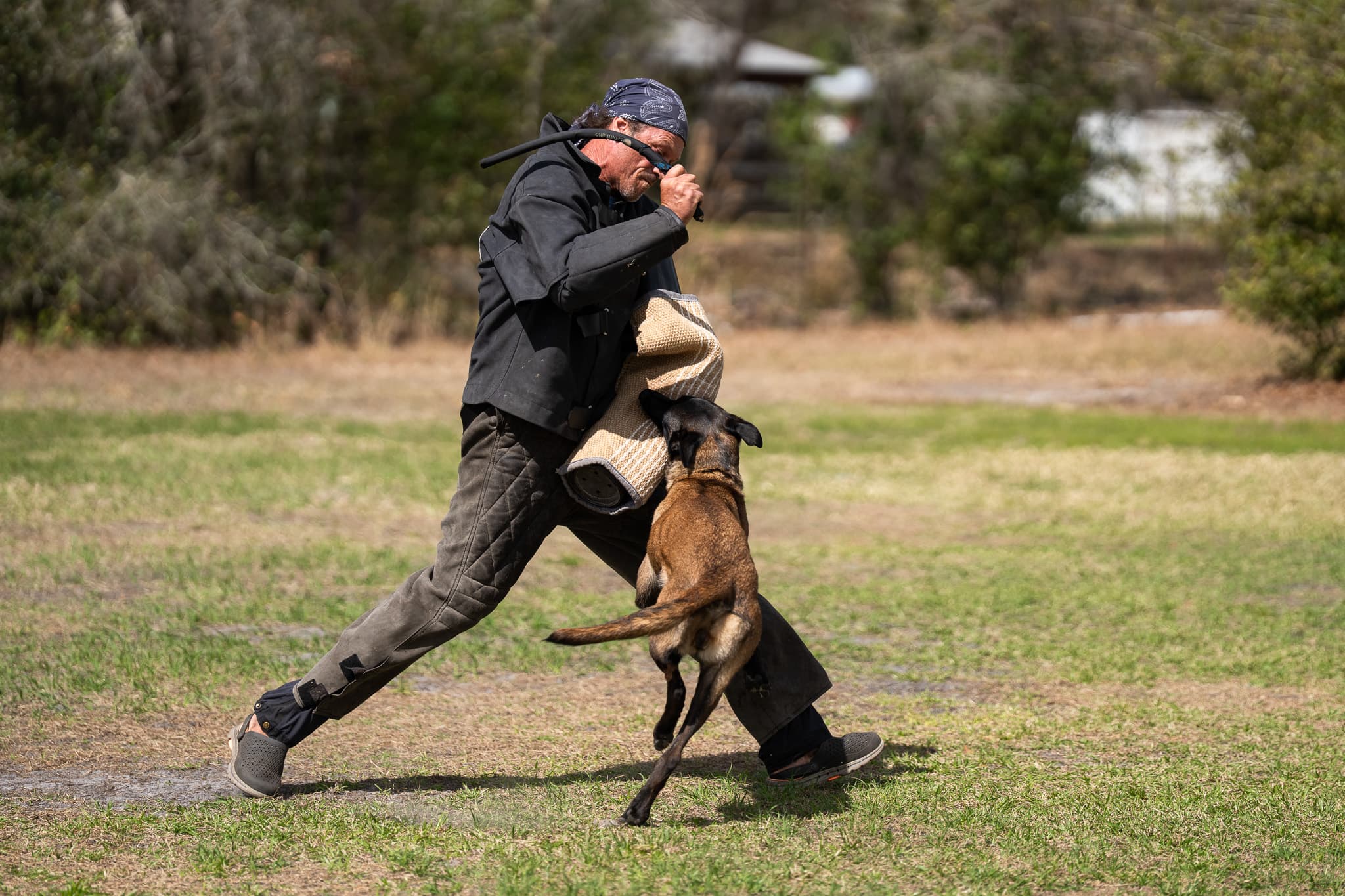
Hello, my name is Ivan Balabanov and I'm a world renowned professional dog trainer. I've been training dogs for more than 40 years. I was a guide dog instructor at San Rafael, California for five years. I was also an animal behaviorist at the San Francisco SPCA in the early 90s, before Jean Donaldson took over for another five years. I am a two-time world champion in the very demanding sport of IGP, which includes tracking, obedience and protection. I am also a 6-time national champion.
I regularly do presentations, seminars and workshops around the world. I help animal shelters, rescue organizations, police departments, military services and regular pet owners to improve their training, and of course, solve any behavioral problems that they may encounter during training. I'm fluent in every aspect of dog training and animal learning, including classical, operant conditioning, ethology, evolutionary psychology, and any other branch of science that is important to dog training.
I place the biggest emphasis on the emotion of the dog during training, because the objective of working with dogs is to create an environment and a relationship where the dog is enjoying the work and the interaction with the trainer. It should go without saying that I'm a big advocate of positive reinforcement, shaping and play. But because of the nature of this presentation, I feel that I need to emphasize that. Without everything that I mentioned so far, excellent training will not be possible at all.
Positive reinforcement is a powerful and effective tool for teaching and controlling behavior. However, sometimes positive reinforcement is not going to be successful in our ability to succeed with some cases. There are often instances where other training methods or approaches are more appropriate or effective. Let's be clear that reinforcements and punishments are intended to control behavior. As a professional dog trainer, this is the most important task of the job.
If a trainer limits themselves to 1 or 2 of the operant quadrants, and is not able to make a breakthrough before they decide to recommend euthanasia or add psychotropic medication, there are two more options within the operant quadrants that have proven to work in the real world, as well as in hundreds of scientific, peer reviewed research.
As I said, I will be offering references, so here is the first one. There is a very well written book, Punished by Rewards by Alfie Kohn. It discusses some of the problems with positive reinforcement. Now, the first thing that I want to discuss is if using aversives in dog training has any place at all. I will point out a number of benefits. The force-free advocates, backed by some research and the American Veterinary Society of Animal Behaviorists, have been pushing the ban on shock collars in the United States for quite some time now.
The narrative is always the same. Most slogans begin with “science says” and “modern and ethical training” have proven that there is no place whatsoever for using aversives and that there are better ways to train a dog. At the end of the day, this is an extremely false propaganda narrative that only hurts pet owners looking for help.
Here is a part of the mission statement the AVSAB published this year, “The application of aversive methods, which by definition rely on application of force, pain or emotional or physical discomfort, should not be used in canine training or for the treatment of behavioral disorders. Training effectiveness. The reward based training methods have been shown to be more effective than aversive methods. Multiple survey studies have shown higher obedience in dogs trained with reward based methods. Hiby et al (2004) found that obedience levels were highest for dogs trained exclusively with reward based methods, and lowest for dogs trained exclusively with aversive based methods. Dogs trained with a combination of reward and aversive based methods (often referred to as balance in the dog training industry) produced lower obedience levels than reward based, but better than exclusively aversive-based training. Aversive training has been shown to impair a dog's ability to learn new tasks” (AVSAB 2021).
This is a dogmatic statement and is quite misleading. There is a lot to unpack in these statements, but before I go into scientific research that proves otherwise, let's start with sound reasoning without taking sides. The dog training industry only suffers from such ignorance and blatant propaganda. Like it or not, everyone knows that punishment works and sometimes is necessary. Let me explain how and why we know this. How to respond to punishment and reinforcement was not something you had to learn. It's programmed in you. We all come born knowing it. In fact, this is the most fundamental law on our planet.
For all living things, including the most primitive single cell organisms, we are born this way. It's baked in our DNA. We approach something good or pleasant, and we avoid something bad and harmful. This helps all living things to navigate the world and make decisions that are in their best interests. Based on this, Skinner named the positive reinforcement, negative reinforcement, positive punishment, negative punishment, also known as the operant conditioning quadrants. And this is how we can control and guide most behaviors, humans or dogs.
In operant conditioning we talk about reinforcement and punishment and in ethology about costs and benefits. The AVSAB and some of the force-free advocates want you to believe that we can operate strictly within the positive reinforcement and negative punishment quadrants, excluding completely positive punishment and negative reinforcement from all of our training, and at the same time achieve superior outcomes than if we have the option to use all four.
The use of aversives is being demonized not because positive reinforcement is better, but because it contradicts force-free narratives, not to mention monopolizing the industry, which I will get to later because this is a real problem that does not help working with dogs as effectively and humanely as possible. It is intended that the AVSAB will be staffed by the most well-educated doctors who will present unbiased science in order for us, all of us, to be more successful.
Unfortunately, that rationale goes against billions of years of successful survival of all living things on planet Earth, and it has been debunked over and over again by sound scientific research. I have to repeat this once again. While it would be ideal to find ways to avoid the use of aversives in training and behavior modification, it is important to recognize that to avoid something unpleasant and approach something pleasant are fundamental biological responses that are ingrained in all living things, whether through natural evolution or grand design.
These responses are a fundamental part of how we navigate and make decisions in the world. So whenever you hear “science says” and “evidence based” coming from force-free advocates, we must use extreme caution and ask questions. The evidence of the opposite is overwhelming, and it hasn't changed since the early research. The force-free trainers love to label trainers who don't abide by their mantras as punitive, coercive and so on.
The narrative that punishment is bad, fear is bad, negative reinforcement is bad, is misleading and dangerous propaganda. It is intended to promote and benefit only certain types of people involved in dog training. The dog industry has become very trendy. The number of pet dogs and the need for training has exploded. In recent years, veterinarians have discovered that they can have a big chunk of the pie and are, in my opinion, monopolizing the dog training industry by cherry picking methodologies that will benefit their paychecks.
Politicians also get involved, and we have to understand that they don't have the time to educate themselves on what is going on in the dog world, and they are very quick to pick sides without putting in the time and effort to really understand what is going on. We have learned to voice quick but not always well-thought opinions. In fact, in society we are presented with a simple question: are you the good guy or the bad guy?
If you use punishment, you must be the bad guy. And if you don't use punishment, then you must be the good guy. This gets manipulative but touches soft spots in your heart. And who ultimately wants to be the bad guy? As much as we are against the use of punishment and penalties, can anyone imagine a society where there are no penalties for breaking rules? No cops, no jails? It's wishful thinking, and I do hope that maybe one day we can construct such a society. But for now, we still must abide by the fundamental law that I already told you about. Oddly enough, the force-free trainers do understand that without some point of punishment, we will not be able to reinforce rules anymore.
Living without rules in society is a huge problem. As much as they don't like to admit it. They do accept the fact that punishment is part of life on planet Earth, and it happens daily around all of us. It is critical to agree that punishment in some cases, might be the only option to stop unacceptable or dangerous behavior to self or others. This is not about how we feel about punishment. It's well documented research in hundreds of scientific papers that cannot be argued with. There is no such thing. Everyone punishes at some point. We must. Even the force-free hardcore ideologies have to use some sort of punishment if they want to have at least some successful outcome, regardless of what the ultimate narrative is.
Punishment in nature is unavoidable. According to the force-free community, if any punishment is to be used, it should only be negative punishment. So let's briefly go over the concept of negative punishment. It's a type of punishment that involves taking something away in order to decrease the likelihood of a behavior occurring again in the future. The concept of negative punishment is to make a behavior less rewarding or reinforcing, which will reduce its frequency or likelihood to happen again.
The advocates of the force-free approach cling to the argument that negative punishment is a socially acceptable form of punishment, because it does not involve physical punishment. However, negative punishment can be just as harsh or abusive. Let's take a look at how the brain responds to negative and positive punishment.
The truth is that the brain responds to both types of punishment in the exact same way. They both involve an aversive or unpleasant experience in order to stop undesired behavior from happening in the future. When a behavior is punished, the brain's amygdala and or orbitofrontal cortex (OFC) are activated. The amygdala is involved in processing emotions, including fear and anxiety, and OFC is involved in decision making and evaluating the consequences of the dog's action. So again, whenever a behavior is punished, the brain experiences an aversive or unpleasant stimulus, which results in a decrease in the frequency of the likelihood of that behavior to occur in the future.
It is important to note that punishment, whether positive or negative, is not always the most effective way to change behavior, but in some cases it might be the only option we have to successfully stop the behavior. Because of punishment, eventually, the trainer might be able to open the door for desired behavior to happen more frequently, so they can be rewarded.
This is also well-recorded research.
Moreover, in order for negative punishment to be effective, certain criteria must be met. First, the dog must want what is being withheld or taken away. Second, the trainer administering the punishment must have total control over the dog and what they want. These criteria are not always possible to meet, especially when working with dogs.
For example, a dog may not care about that particular reward or may be able to find an alternative source for it. To make things more complicated, what is reinforcing the behavior may not be clear or not possible to control, which makes the use of negative punishment obsolete. In 2008, a German study, Comparison of Stress and Learning Effects of Three Different Training Methods in Dogs led by Schalke and Salgirli found that negative punishment increased cortisol level, which is a marker of stress significantly more than using electric or prong collar in the dogs.
This suggests that negative punishment may be more stressful for dogs than other forms of punishment. One of the benefits of using positive punishment is that the intensity can be varied, whereas with negative punishment the intensity is all or nothing. Often, to demonstrate the power of negative punishment, we use human examples. We can take a child's PlayStation or their phone away and instruct them that they will only get it back when they do this or that.
Negative punishment is used in dog training. Of course, but the dog's understanding of the punishment and the behavior being punished is limited compared to humans’ understanding. A major difference between humans and dogs is the ability of humans to be instructed. Humans have the ability to learn from others through communication and instruction, which allows them to acquire new skills and knowledge in a very different way than dogs.
Humans can be directly instructed and educated about the reason behind certain actions and punishments. Humans and dogs are different in a number of ways, but perhaps one of the more significant differences is the ability of humans to engage in abstract thinking. Abstract thinking refers to the ability to understand and think about complex ideas and concepts that are not directly tied to physical objects or experiences.
This ability allows humans to engage in a wide range of activities, from solving mathematical problems to creating art and music. Dogs learn best through trial and error and through associations between certain actions and consequences. With a child, we can use negative punishment, for example. Like this: “I'm taking your bike away until you improve your grades at school.” With dogs, we really cannot create that sentence in order for the dog to understand.
So when we use negative punishment, we are leaving it up to the dog to decide what is being punished and what needs to change. This is what I mean by not being able to be instructed. Timeout as punishment is another popular form of punishment amongst the force-free community and of course other dog training. There are several types of timeouts, but not to go in depth. The basic concept is basically removing the dog from the environment. Just like the negative punishment, timeouts can work quite well, but how does the timeout affect the dog compared to positive punishment? Here is another interesting study for you to consider. Just Think: The Challenges of the Disengaged Mind by Timothy D. Wilson, done in 2014. In 11 studies, they “found that participants typically did not enjoy spending 6 to 15 minutes in a room by themselves with nothing to do, and that many prefer to administer electric shocks to themselves instead of being left alone with their thoughts.”
What is striking is that simply being alone with their own thoughts for 15 minutes was apparently so aversive, that it drove many participants to self administer an electric shock that they had earlier said they would pay to avoid. There is plenty of research of the side effects of timeouts. If I begin to list references, this video will become quite long.
But here is one more that is of importance. Harris and Hirshfield found that “non contingent release from timeouts may be a critical factor, leading to negative associated effects.” In the beginning of this article, I asked the question: is there a place for the use of aversives? The force-free dogma is that positive reinforcement is the superior option to work with dogs.
They use slogans like this one: balanced traditional trainers are stuck in task training and that's why they use tools. How can aversives ever be suitable to train dogs? Or would you do this to a child? Fear based training has been proven to be damaging and so on. These are once again slogans that touch a soft place in our hearts, and we are forced to make that decision if we are a good or bad person. Ultimately not based on scientific research. It’s an incorrect and dangerous narrative that is being forced upon pet owners and dog trainers. Dogs are social animals. The way they interact with the world is mostly by using aversives instead of giving each other food as rewards, they do bite each other during play or if they want to establish dominance, and so on.
Clearly, aversives are the most functional communication tool amongst animals and dogs. This is by far the most natural way for dogs to communicate with each other. Here I will add another study for those that are questioning my statement. Punishment in Animal Societies by T.H. Clutton Brock and G.A. Parker in 95.
Now let's go over what science says about aversives. I will begin with positive punishment. Is there a place for it? Is it at all that bad? From early years of behaviorism, Skinner was very much against the use of punishment. In operant conditioning, it's believed that positive punishment is the least effective, per Skinner himself. Here are some of the major arguments against positive punishment. Punishment induces emotional changes that interfere with learning, but so will positive reinforcement or any other approach when used inappropriately. “Nevertheless, studies show that the effectiveness of positive punishment in reducing problem behaviors tends to be associated with a wealth of positive side effects.”
“The positive side effects tend to far outnumber any negative side effects associated with positive punishment.”
“Many studies have found that using punishment as a behavior modification technique may also increase the incidence of wanted behaviors.”
“Punishment provokes aggression.”
While aggression response is not strictly related to positive punishment or negative punishment. In fact, experiments have shown that parts of positive reinforcement are aversive as well and will lead to aggression. “The transition from food reinforcement to extinction is an aversive event, and aggression is sometimes a major side effect of that extinction.” This is why the marine world trainers invented the Least Reinforcing Scenario. The LRS, which is basically a form of bribing with certain criteria but with questionable effect.
Fortunately, further research on aggression has demonstrated that the problem of enlisted aggression is not really serious in most situations, because “aggression can be easily suppressed through the use of contingent punishment.” Furthermore, “it has been demonstrated that near zero levels of elicited aggression could be produced by punishing each attack, even when non contingent shocks were scheduled every second during two hour sessions. ”
Clearly, if aggression was not punished in our society, one would expect that attacks would occur in nearly all situations that involve punishment and reinforcement or extinction. Luckily for us, this type of behavior is itself reliably suppressed. Positive punishment is ineffective. This is another very common argument, and there are plenty of research findings that indicate “punishment can be highly effective for treatment of a variety of behavior disorders. Moreover, punishment also has been proven in so many instances to be more effective than that treatment with positive reinforcement techniques or extinction.”
“Although the use of positive punishment has been controversial for a number of years, research findings suggest that punishment still remains an important option for behavior problems.”
Here is one very big reason why sometimes positive punishment is the best option. “It is especially effective when the reinforcers maintaining the problem behavior can not be identified and/or controlled.”
Remember when we talked earlier about negative punishment? I said that the owner or trainer has to be able to control the environment and the reinforcer. Otherwise negative punishment will not be successful. And this is where positive punishment comes into place. “Positive punishment” - also without a doubt - “is the treatment of choice for life threatening behaviors that must be suppressed rapidly to prevent serious harm to self or others.” Punishment induces emotional changes that interfere with learning, but so will positive reinforcement or any other approach when misused.
Nevertheless, studies showed “the effectiveness of positive punishment in reducing problem behaviors tends to be associated with a wealth of positive side effects.” “The positive side effects tend to outnumber any negative side effects associated with positive punishment.” Reported studies have found that “using punishment as a behavior modification technique may also increase the incidence of wanted behaviors.” One silly argument is that “punishment does not teach a desired behavior” Well, punishment is not supposed to teach dogs new behaviors or what to do in place of the problem behavior.
This is why we have positive and negative reinforcement. They are extremely effective for teaching alternative behaviors. Punishment creates fear. Before you agree to this, let's look at the statement without using our initial emotional response. Fear can be extremely beneficial in teaching and learning in certain contexts, particularly in situations where there is a need for self-preservation or the prevention of harm. Many harmful encounters can be avoided strictly to exposure and some element of fear, without the need to experience serious physical harm.
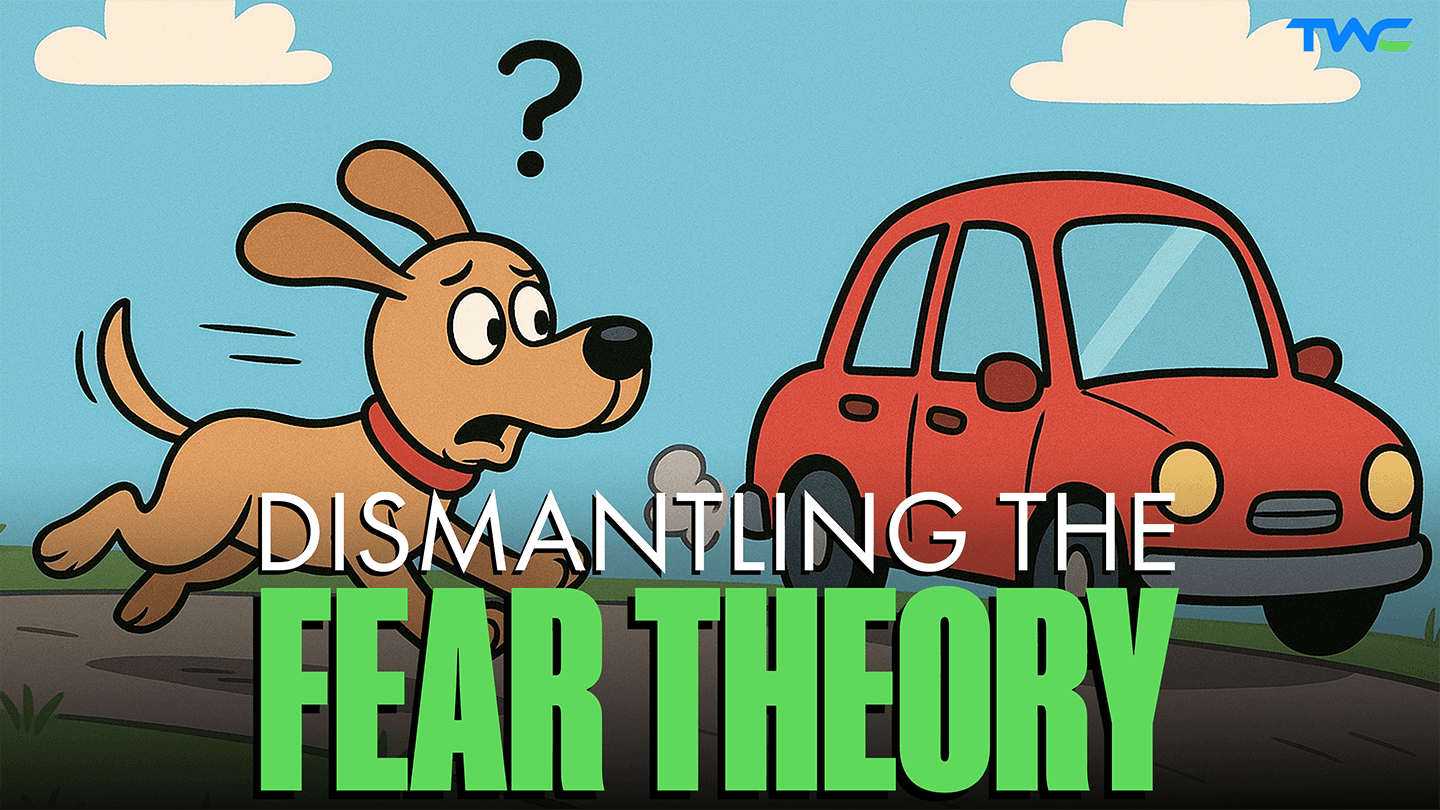
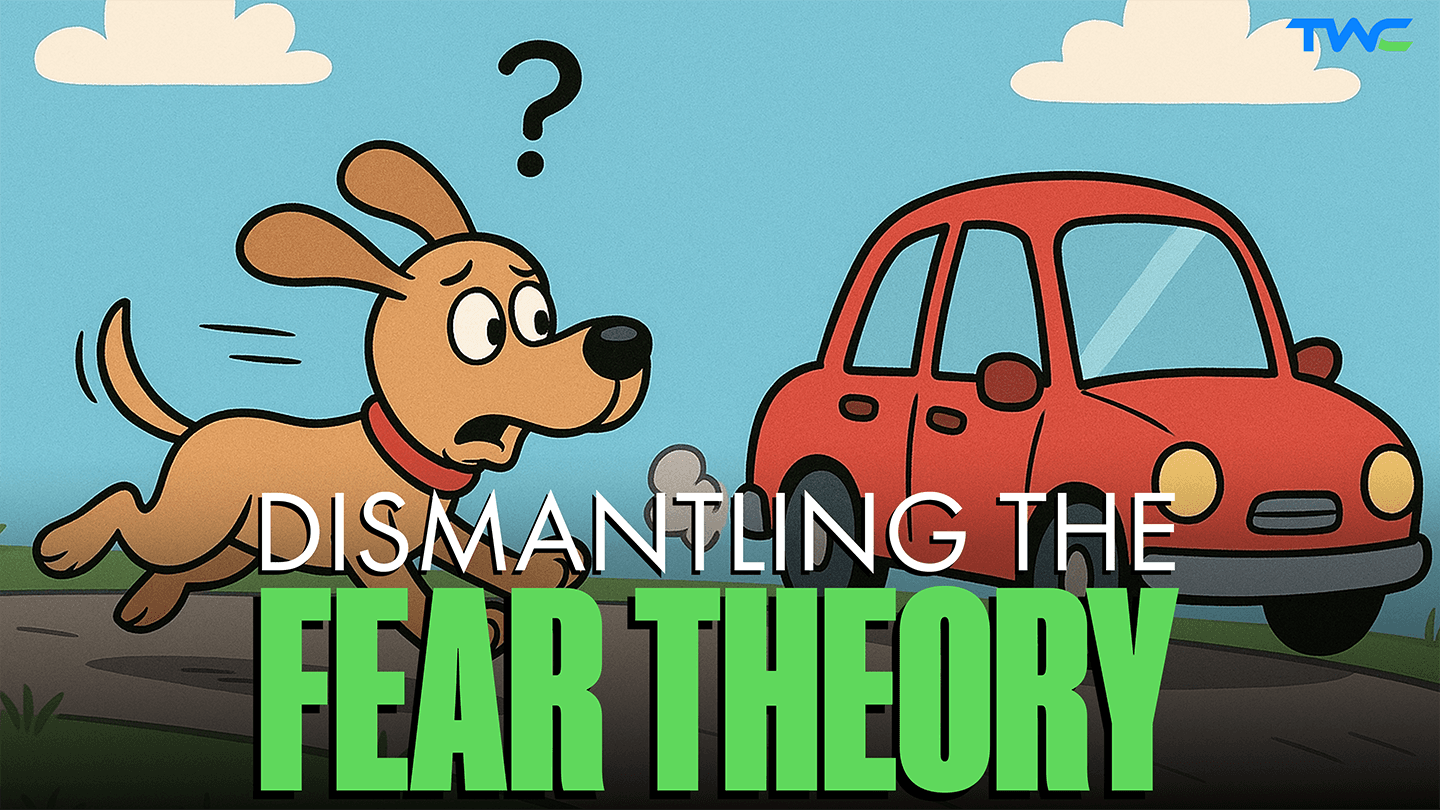
I will mention here again the most fundamental law on earth for all living things. We approach something good and we avoid something bad. With some dogs it is important to teach them to be afraid of certain behaviors or actions that could be dangerous for them or others. For example, depending where you live and what you do with the dog, it may be very important to teach it to respect cars. When done by an expert trainer, even the worst car chaser can be taught to avoid and ignore them throughout. Creating some respect for the cars through some fear. For those of you that remember the famous dog Chaser, despite her intelligence and training, she had to learn as well that cars are something you don't challenge or mess with. John Pilley mentions this in his book. Chaser was quite stubborn, but ultimately learned to respect the cars. A certain amount of fear is also the most natural way to teach a dog not to chase livestock, and there is plenty of comprehensive research done to back this statement. In many instances, fear can serve as a powerful motivator for learning and can help dogs to develop good habits and behaviors that keeps them safe. Fear can also help dogs to understand and respect boundaries, which can be important in maintaining a safe and harmonious relationship with their owners and others.
Learned helplessness. It's an extremely famous study that gets constantly pointed to. It's done by Seligman and Maier in 1967. The force-free community always refers to the worst case scenario that may happen, so we have to go over this one as well.
They found that if dogs were initially exposed to an inescapable electrical stimulus, they would not try to learn an avoidance strategy later. Even when one was available. They suggested that the animal had learned that it was helpless in its ability to avoid aversives. This research was subsequently used as a model of depression, but is of questionable validity. Two years after the original study, Maier et al 1969 found that pre-training of avoidance with an electrical aversive increased resistance to the development of learned helplessness, perhaps increasing psychological resilience in the face of inescapable aversion.
Early experience and other factors contributing to individual differences may also affect the tendency to develop learned helplessness in the response to non contingent aversive. The results of Maier et al described above have more recently been reevaluated, along with other experimental studies in rats by psychologists with an interest in the development of positive psychology. In this context, exposure of aversives that can be controlled by that animal's behavior helped to build increased resilience not only to the aversive in question, but more broadly to stressors.
Thus theoretically, at least controlling the exposure to aversive could, somewhat paradoxically, improve the long term well-being of dogs. Positive punishment just as positive reinforcement has several rules that must be followed in order to be successful, but this is an extensive topic that can only be learned at dog training schools or other extensive training. Negative reinforcement. Most fun games. Most popular games involve negative reinforcement. The easiest one, as far as understanding the concept, is hot hands. I give it as an excellent example to my students at my dog training school to demonstrate how negative reinforcement is not about creating unhealthy fear and emotional damage, but a fun game everyone likes to play. We clearly use negative reinforcement in every so-called contact sport from boxing to football, soccer, basketball and so on.
They are based on escape and avoidance which leads to reward. It is important to understand the fundamentals of negative reinforcement so you can avoid the negative side effects. Pointing out only negative side effects which are due to incompetent use is unfair. We can do the same with positive reinforcement, of course. Not to mention that ever since the 1975 study done by Michael, which says that every reinforcement includes both positive and negative form, it is quite unfortunate that the AVSAB would rather recommend psychotropic medications so light handedly when behavior therapies, including some form of aversives, can eliminate most behavior problems without the wide and dangerous side effects of psychotropic medications.
We’re almost to the point to talk about shock collars but not yet. One last topic is to briefly review the most popular dog training equipment that the force-free leaders demand should be the only training equipment used. These training tools are falsely presented as non aversive. Therefore, they do not cause pain, discomfort or fear. Let's first take a look at the so-called no-pull harness.
The way this harness works, the way it convinces a dog not to pull is simply through discomfort. It really doesn't matter what kind of marketing and sugar coated lines the force-free gurus are using to convince you, the no pull harness is 100% aversive equipment. Anyone who argues with this, no matter what title they may have in front or behind their names, must accept the fact that they are not speaking the truth.
Here is how it works. The straps that go under the legs restrict movement through discomfort. If the dog stops pulling, it escapes the discomfort. Therefore, unarguably negative reinforcement is used and so is positive punishment here. If you don't follow their ideology blindly and have the courage to agree with what you already know, this is a fact. There is an irony here.
For example, German dog training laws clearly state that inflicting pain is not okay, while in fact they promote pain inflicting equipment. Have you noticed that all YouTube videos that demonstrate how it works and its effectiveness are solely with dogs that are very old and never have any intention to drag their owners around. They will not show you this type of video with a dog like the one you're seeing right now. Force-free advocates will jump on here and convince you that what you see in this video is not how it should be done. They will say you have to start slow and take your time, etc., which could mean not to take the dog on a walk for a very long time, sometimes months and sometimes even years. The no-pull harness and the prong collar for example, work on the exact same concept. They bring some level of discomfort to convince the dog not to pull. I can present a logical argument as to how much safer the prong collar actually is compared to the no pull harness, but that's going to be a topic for a different video. The second dog training equipment, which the force-free community highly recommends, are the different types of head collars.
If they worked, we would be seeing them at least on every other dog, but this is clearly not the case. One of the most vicious defenders of the force-free movement, Karen Overall has described it as a dominant tool. “These collars are alleged to work by mimicking natural dominance behavior, thereby increasing deference and obedience to the owner.” Personal observation indicates that it is not uncommon for dogs to flip out and protest as soon as the collar is put on.
And in fact, some of them quite violently, Ogburn et al noted that dogs appeared more subdued while wearing a head collar than a regular collar. Without a question, any professional dog trainer will attest that dogs with more severe behavior problems will certainly resist the head collar much more than a dog that is by nature submissive and compliant.
When convincing such a dog to wear a Halti are we breaking their spirit? Does it lead to a shutdown and learned helplessness? Think about this: when someone says force-free absolutely works. We have to be clear that it is not force-free. Moreover, if it works, why are we fighting to legislate and ban other methods? No one ever had to force anyone to stop using flip phones in exchange for smart phones.
There are no bans on flip phones. No legislation, no science says. The choice was easy because it was obvious. Results are important to dog owners. Most trainers that use aversive when needed will show you proof that a big percentage of their clients first worked extensively with force-free trainers before they contacted them for help. Of course, on the other hand, the opposite is also true. Fact is that if one was always superior, the other will be extinct very quickly without the need of legislation and bans. Clearly this is not the case here.
If we remember Victoria Stilwell and the TV show Guardians of the Night this was done about seven years ago. Do you know how many police dog departments use the methods that she was promoting in the TV show? None. Do you know why there is a ban against electric collars and prong collars in Germany? Because they cannot prove and convince any of the trainers that the alternatives are better. In the dog world, any new idea, any new concept that works flies around the world very fast. The next day, most dog trainers are already using it, and within a month everybody knows about it. It has become widely accepted. So what is the reason that the force-free community cannot convince all trainers that they have a better way?
Now it's time to go over the electric collar. Okay, now that we have talked about the use of aversive in dog training in the form of negative reinforcement and positive punishment, along with some research evidence and references, it's time to go over the shock collar itself. I'm sitting outside in one of our training areas because as I'm talking, I'd like you to watch the dogs in the background interacting. They all are wearing various collars and my trainers are holding remote controls. I will not tell you which dogs have electric collars on. It could be that all have electric collars or none of them does.
According to the force-free advocates, it should be pretty straightforward to spot the dogs that have been or are shocked amongst the ones that are trained without the aversives. They should show stress, low body posture, anxiousness, avoidance, insecurity and of course, fear. Possibly even aggression to other dogs or the trainers. Lots of lip licking, yawning, yelping, tuck tails and so on. In fact, some of them must be traumatized for life. They would not even want to be here, but instead hiding in the far corner. Kind of the thing that the force-free refers to learned helplessness. So again, as I talk, pay attention to what goes on behind me. How did the shock collar become so popular? For this, we need to look at the history because there is a good reason.
Electric stimuli was originally introduced in animal learning research many years ago as a way to create discomfort in animals in a controlled and consistent manner, without causing physical harm. Up to that point, the researchers were running into a lot of problems, such as seriously injuring the test animals. Moreover, it was impossible to replicate that study or even to repeat a session or a trial because of inconsistency of the level of intensity.
During this all behavior studies, researchers used a wide variety of high risk aversive techniques, including food restriction, deprivation, physical restraint, water deprivation, noise bursts, a mixture of mechanical and tactile stimuli such as pinching and hitting, air puffs, and so on. So it is very important to note that the use of electricity was accepted as a safer alternative to all other aversive tools, and yes, even then, no pull harness.
Nevertheless, the trainers who are against the electric collar argue that it is harmful both physically and emotionally, and can lead to increased aggression and fear, always suggesting that worst case scenario. However, the same research findings that suggest banning electric collars in fact proved that when used properly, the tool is very effective, and even if there was any element of fear or discomfort during the process, it was very short lived and the positive results always outweighed the negative ones.
Instead of listening to someone's interpretation of the findings, I suggest taking the time to study the research, which isn't as easy as just reading the abstract or the conclusion of the paper. For example, Schalke et al use three groups for one of their studies. One of the groups of dogs to receive non contingent random shocks, to which of course, the dogs in this particular group responded negatively simply because they could not make any sense of what was going on and got shocked just because.
Imagine you walking into a kitchen and whatever you come in contact with being a chair, table, microwave, you name it. Sometimes it shocks you and sometimes it doesn't. Clearly you will not be able to make sense of any of it, and you will most likely choose to avoid being in that room altogether whenever possible. On the other hand, if the only time you'll get shocked is when you turn on the toaster, you will quickly learn to avoid it. But other than that, you are very comfortable going on with your life as usual in the kitchen.
This is exactly how electric fences at any farm work. Have you ever seen horses or any livestock shivering in the far out corner of the field, afraid to move anywhere because on this end of the property there is an electric fence? You haven't. And the reason for this is quite simple. The shock is contingent, meaning 100% predictable upon interacting with the fence. So the message is simple. Stay away from the fence. Remember once again that even single celled organisms will approach something good and avoid something bad. As soon as we have the answer to our puzzle, we move on with our life. We never, ever worry about things we have solutions for. When an electrician is getting ready to go to work in the morning, they don't panic. They have zero fear. Why? Because they have this answer to the puzzle. The solution I was just talking about. Every once in a long while, someone will make a mistake that will remind them to pay attention at work.
As you can see in the force-free arguments are based on a hypothetical worst case scenario and not on actual proper use. We don't think of banning driving because of a drunk driver. We penalize drunk drivers. Same should be with trainers who use the tools incorrectly. So far I have given you quite a few references, but that's not everything.
We have plenty of scientific evidence of the benefits of the electric collar. I've already listed some. There are many others, and here I will point to a few more. The Treatment of Dangerous Behavior by Richard M. Foxx, 2003. “The use of comprehensive, multi-layered behavior programs involving punishment, resulting in dramatic and long lasting reduction in aggression. The elimination or greater reduction of psychotropic medication use, and major lifestyle improvements.” Behavioral differences between three breed groups of hunting dogs confronted with domestic sheep by Frank O. Christiansen et al. 2001. They studied 41 elk hounds, 29 hunting dogs, and 68 English setters. Behaviors indicative of motivation for chasing or attacking sheep were examined in three different ways and were successfully suppressed. Effects of single and repeated shock in healthy volunteers. The validity of argument in favor of contingent shocks, amongst others related to safety. All of the electrical shock given its effectiveness. This study adds to the debate, but demonstrates that 48 healthy individuals who received 480 shocks failed to experience any negative side effects, such as shut down, fear or aggression. Side effects of contingent shock treatment by W.M.W.J van Oorsouw 2007. “When their treatment was compared to baseline measures the results showed that with all behavioral challenges, individuals either significantly improved or did not show any change for the worse. Negative side effects failed to be found in this study.” Positive side effects in the treatment of self-injurious behaviors by Thomas R Linscheid, 1994. The right to treatment using aversive stimuli by Emanuel Rechter and Martin Vrablic.
Okay, here is one that is very important. Evaluation of an aversion based program designed to reduce predation of native birds by dogs; an analysis of training records for 1156 dogs. This by far is the most comprehensive study ever done on the matter. On top of the incredible number of dogs, the study was conducted within several years from 1998 till 2007, which means that they actually did follow ups, something that is never done by the biased studies pointing out only the negative side effects.
Those studies only focus on the dogs reactions at the moment when the aversive is applied, but are not concerned with the immediate recovery or the much needed reliability at the end. It is very different when conducting research to prove that the ideology narrative is correct, versus research to find out the solution to a serious problem. In this case, the preservation of kiwi birds in New Zealand.
Let's compare that New Zealand study to this one. A study done by the advocates of positive reinforcement only training The welfare consequences and efficacy of training pet dogs with remote electronic training collars in comparison to reward based training done by Jonathan Cooper, Daniel Mills et al in 2013 at Lincoln University in UK. This particularly poorly conducted study is referred to a lot as the proof for superiority of positive reinforcement.
They had to demonstrate that dogs can be recalled and stopped from chasing sheep. Ironically, dogs who are kept on leash, and sheep are in small play pens which restrict movement, which cannot trigger any chase instinct in the dogs. Subsequently in her study Efficacy of dog training with and without remote electronic collars, versus a focus on positive reinforcement. In 2020, China et al use the same video material to basically double down on the same findings.
I tried to have Professor Mills on my podcast to discuss these findings, but after the initial contact, he refused to come forward. Fortunately, in 2021, China's work was reviewed by Rebecca Sargisson and Ian McLean. They pointed out many flaws in the paper, and concluded that such research cannot be used to justify the banning of e-collars. The persistent challenge with research that solely focuses on positive reinforcement is the tendency to make grandiose statements in their papers without providing sufficient evidence to support their claims beyond the study. To ensure that training methods are effective and evidence based, it's crucial to critically evaluate research. These are not the only studies. There is a wealth of information out there for those of you who want to learn more. If needed, I'm always up for a respectful discussion or a debate on scientific findings, as well as hands on training and behavior cases.
As the force-free community continues to push for a ban on electric collars, they're using very misleading fear mongering tactics in their efforts. They will do whatever it takes to present the use of electric collars as cruel and unethical. Their analogies and examples have no basis in proper electrical or training methods. They strive to use scientific jargon and give beautiful examples when it comes to positive reinforcement training. However, all examples that they offer on electric collar training clearly demonstrate their lack of understanding of the proper use.
You might have seen a demonstration by a force-free trainer, followed by an explanation of how the electric collar works. Here is typically how it goes. They will get a volunteer, strap the collar on their wrist. Next, they will let you experience 1 or 2 of the low levels of intensity, and then dial it up to a level where the volunteer will feel a pretty high level of discomfort and react accordingly.
When asked to share the experience, the volunteer will say that it was very painful and that they wouldn't like to try it again. Next, of course, comes the statement, “I would never do this to my dog.” Let me explain why this is misleading. I'm going to give you a simple example. Let's say I want this cup. For whatever reason, I'm extremely, extremely fixated on it. The cup is filled with some substance that is dangerous., if I drink it. You can offer me another cup or even many more cups, perhaps some money or whatever we think it may be that I like a lot. For one reason or another, I'm not falling for it. I could care less what you are offering me, and as a matter of fact, the more you are trying to deflect my attention from my cup, the more obsessed I become with it.
One other option will be to put that cup away for good and the problem is solved. Unless we cannot put the cup away, or there are many more such cups around with that same poison. Let's assume that poison is very tasty and reinforcing, but in the long run it will cause cancer or something, so you'll get the idea. Bottom line, positive reinforcement is not working. Negative punishment is not working. Just as I have already pointed out through referencing studies, this is not that uncommon. Someone might even suggest psychotropic medication in desperation. While the answer is actually quite simple, we can add a safe aversive and allow me to make a choice.
So let's say I receive level two on the collar which is a very mild discomfort. Now, in return I will have to make a decision on what to do next. I will weigh the pros and the cons, the cost and the benefit and then respond accordingly. If the benefit outweighs the cost, I will keep my cup despite any discomfort. However, if the intensity increases to a point where the cost outweighs the benefit, I will reevaluate my decision.
Ultimately, what must be clear is that I am in control of the situation. It is my choice to be stubborn or not. I know I am not telling you anything new here. It all goes back to that fundamental law to approach or avoid something. If you didn't pay for a parking spot, I guarantee you that you will not go to prison. Typically, the police officer will give you a warning or worst case scenario, issue a ticket and tow your car away. But most definitely not going to prison. Most definitely, your license will not be suspended for the next ten years. The demonstration we discussed earlier is similarly illogical.
I'm going to explain how an electric collar works. First thing first, no one can die from an electric collar. Without going into great detail. It is important to understand the relations between voltage and current when we try to scare each other. Here is a study by the New Zealand Department of Scientific and Industrial Research, Dix 1991. That should clear up a lot of the misconceptions.
Now let me explain how the electric collar actually works and what happens, how it communicates with the brain. So we have these two contact points. I'm sure everybody is to some level familiar with the electric collar. The electricity really travels from here to here under the skin right under the skin. It doesn't travel anywhere else. It does not create physical harm. There are plenty of studies as I pointed out already, but it tricks the brain to respond in a certain way. It basically sends up kind of like a panic message to the brain to say, watch out, you need to escape, or you need to avoid that discomfort because it leads to something dangerous. And this is really the trick. And this is what we are doing when we're using an electric collar. It is very easy for me or any trainer that is expert, using an electric collar, to condition, to teach somebody to accept a much higher level without sending that panic message to the brain. All we need to do is a simple, methodical process, like we start with a very low level. We press a few times to where the brain accepts what's going on and realizes that there is no need to panic. Then we go to our next level and the next level. Gradually we increase the levels. Of course, there will be some physical discomfort and some reflexes, like probably if the collar is here, your finger will twitch. And that's how far it goes. At that point, the brain knows that that's a trick. It's not going to go into a panic and search necessarily for responses. Here are also references from science on this. With prior exposure experience, human subjects tolerate at least twice the electrical intensity tolerated by naive subjects. Kaczmarek et al 1991.
Some other interesting facts of importance is that individuals, regardless of size, age, etc., are more or less tolerant to the impulse. Generally speaking, women will tolerate higher levels than men. What are the benefits of a ban? What's going on in Europe today? We know that at least for 5-10 years in certain countries that collar has been banned. So what is going on there?
The truth is that the people that use electric collars had to make a choice. Very few decided not to use it. Most of the trainers continue to use electric collars. The only difference is that they hide. They don't use it in public places. They train secretly behind closed doors and so on. Second option, if they don't use the electric collar as the best form of aversive, then they have to resort and go back to the primitive ways that we talked about how scientists were using all those primitive aversive tools prior to the electric collar.
This clearly is not a good solution. Yes, it makes us feel good. It makes us feel that we are doing something to protect the dogs, but ultimately we are actually creating arguably way more damage. How? Because if the collar is banned, there is no education. Somebody like me, cannot teach an average dog trainer how to use it correctly. And if they decide to use it now, they have to go through trial and error and probably make a lot of mistakes along the way. Or as I said, they will have to resort to using any other form of aversive that actually will cause, on top of everything else, physical damage to the dog.
There are few different systems that teach and use electric collars differently. I don't want to go into detail here to say which one is preferable, but as a rule of thumb, when the electric collar is used properly, there is nothing in the dog's behavior or the body language that will hinder the use of electric shock. There will be no lip licking, not tucked tail, overall suppression, and so on. If we compare a group that has no experience with shock collar and the one that has experience with shock collar, it should be impossible to tell which one is which. The trainers that can create that type of high level of training are the people who can teach the proper use of electric collar training. Education over ban is essential for the advancement of dog training. The extremist will not change their mind, but many of the people who have been listening blindly to false narrative. I advise them to do some research on their own.
Of course, don't forget that the algorithms will feed you what you want to hear. So you need to search intelligently for new information, not the one that you already know of. In closing, I must also say that I am predominantly a play based trainer. I use positive reinforcement learning. Positive reinforcement works, but I do like to have the opportunity to use a form of aversive to stop dangerous behaviors or wherever else is needed.
Whatever else, the positive reinforcement is not working. Some of the force-free community advocates strongly advocate for a cause, despite being aware that it has flaws and does not align with the best interests of dogs and trainers. These individuals are primarily motivated by their strong belief in the ideology, rather than the desire to promote the well-being of the dogs.
It is important to critically evaluate and question the intentions, reasoning, and evidence behind the claims and make decisions based on all research and experience available, instead of cherry picking studies that suit your beliefs. Thank you for watching.
Works Cited
Apsche, Jack, and Saul Axelrod. Effects of Punishment on Human Behavior. Elsevier Science, 2014.
Arnja R. Dale, Christopher A. Podlesnik, Douglas Elliffe,Evaluation of an aversion-based program designed to reduce predation of native birds by dogs: An analysis of training records for 1156 dogs,Applied Animal Behaviour Science,Volume 191,2017,Pages 59-66,ISSN 0168-1591,https://doi.org/10.1016/j.applanim.2017.03.003.(https://www.sciencedirect.com/science/article/pii/S0168159117300746)
Azrin NH, Hutchinson RR, Hake DF. Extinction-induced aggression. J Exp Anal Behav. 1966 May;9(3):191-204. doi: 10.1901/jeab.1966.9-191. PMID: 16811286; PMCID: PMC1338179.
Azrin NH. Punishment of elicited aggression. J Exp Anal Behav. 1970 Jul;14(1):7-10. doi: 10.1901/jeab.1970.14-7. PMID: 4988590; PMCID: PMC1333693.
Baron A, Galizio M. Positive and negative reinforcement: Should the distinction be preserved? Behav Anal. 2005;28(2):85-98. doi: 10.1007/BF03392107. PMID: 22478443; PMCID: PMC2755378.
Blenkush N (2017) A Risk-Benefit Analysis of Antipsychotic Medication and Contingent Skin Shock for the Treatment of Destructive Behaviors. Int J Psychol Behav Anal 3: 121. doi: http://dx.doi.org/10.15344/2455-3867/2017/121
Campbell, Byron A., and Russell M. Church. Punishment and Aversive Behavior. Appleton-Century-Crofts, 1969.
China L, Mills DS and Cooper JJ (2020) Efficacy of Dog Training With and Without Remote Electronic Collars vs. a Focus on Positive Reinforcement. Front. Vet. Sci. 7:508. doi: 10.3389/fvets.2020.00508
Christiansen FO, Bakken M, Braastad BO. Behavioural differences between three breed groups of hunting dogs confronted with domestic sheep. Appl Anim Behav Sci. 2001 Apr 26;72(2):115-129. doi: 10.1016/s0168-1591(00)00202-1. PMID: 11278031.
Clutton-Brock TH, Parker GA. Punishment in animal societies. Nature. 1995 Jan 19;373(6511):209-16. doi: 10.1038/373209a0. PMID: 7816134.
Cooper JJ, Cracknell N, Hardiman J, Wright H, Mills D. The welfare consequences and efficacy of training pet dogs with remote electronic training collars in comparison to reward based training. PLoS One. 2014 Sep 3;9(9):e102722. doi: 10.1371/journal.pone.0102722. PMID: 25184218; PMCID: PMC4153538.
DIX, G. I. (1991) Investigation of sonic invisible boundaries unit. New Zealand Department of Scientific and Industrial research. Report ECAE00521.
Duker PC, Douwenga H, Joosten S, Franken T. Effects of single and repeated shock on perceived pain and startle response in healthy volunteers. Res Dev Disabil. 2002 Jul-Aug;23(4):285-92. doi: 10.1016/s0891-4222(02)00119-1. PMID: 12365852.
E. Schalke, J. Stichnoth, S. Ott, R. Jones-Baade,Clinical signs caused by the use of electric training collars on dogs in everyday life situations,Applied Animal Behaviour Science,Volume 105, Issue 4,2007,Pages 369-380,ISSN 0168-1591,https://doi.org/10.1016/j.applanim.2006.11.002.(https://www.sciencedirect.com/science/article/pii/S0168159106003820)
Fisher W, Piazza C, Cataldo M, Harrell R, Jefferson G, Conner R. Functional communication training with and without extinction and punishment. J Appl Behav Anal. 1993 Spring;26(1):23-36. doi: 10.1901/jaba.1993.26-23. PMID: 8473256; PMCID: PMC1297717.
Grace NC, Kahng SW, Fisher WW. Balancing social acceptability with treatment effectiveness of an intrusive procedure: a case report. J Appl Behav Anal. 1994 Spring;27(1):171-2. doi: 10.1901/jaba.1994.27-171. PMID: 8188557; PMCID: PMC1297786.
Hagopian LP, Fisher WW, Sullivan MT, Acquisto J, LeBlanc LA. Effectiveness of functional communication training with and without extinction and punishment: a summary of 21 inpatient cases. J Appl Behav Anal. 1998 Summer;31(2):211-35. doi: 10.1901/jaba.1998.31-211. PMID: 9652101; PMCID: PMC1284113.
Harris SL, Ersner-Hershfield R. Behavioral suppression of seriously disruptive behavior in psychotic and retarded patients: a review of punishment and its alternatives. Psychol Bull. 1978 Nov;85(6):1352-75. PMID: 366651.
Haug, Lore & Beaver, Bonnie & Longnecker, M.. (2002). Comparison of dogs’ reactions to four different head collars. Applied Animal Behaviour Science - APPL ANIM BEHAV SCI. 79. 53-61. 10.1016/S0168-1591(02)00115-6.
Israel, M. L., Blenkush, N. A., von Heyn, R. E., & Rivera, P. M. (2008). Treatment of aggression with behavioral programming that includes supplementary contingent skin-shock.The Journal of Behavior Analysis of Offender and Victim Treatment and Prevention, 1(4), 119–166. https://doi.org/10.1037/h0100460
Israel, M. L., Blenkush, N. A., von Heyn, R. E., & Rivera, P. M. (2008). Treatment of aggression with behavioral programming that includes supplementary contingent skin-shock.The Journal of Behavior Analysis of Offender and Victim Treatment and Prevention, 1(4), 119–166. https://doi.org/10.1037/h0100460
Johnny L. Matson, Marie E. Taras,A 20 year review of punishment and alternative methods to treat problem behaviors in developmentally delayed persons,Research in Developmental Disabilities,Volume 10, Issue 1,1989,Pages 85-104,ISSN 0891-4222,https://doi.org/10.1016/0891-4222(89)90031-0.(https://www.sciencedirect.com/science/article/pii/0891422289900310)
Johnny L. Matson, Marie E. Taras,A 20 year review of punishment and alternative methods to treat problem behaviors in developmentally delayed persons,Research in Developmental Disabilities,Volume 10, Issue 1,1989,Pages 85-104,ISSN 0891-4222,https://doi.org/10.1016/0891-4222(89)90031-0.(https://www.sciencedirect.com/science/article/pii/0891422289900310)
Johnston JM. "Replacing" problem behavior: an analysis of tactical alternatives. Behav Anal. 2006 Spring;29(1):1-11. doi: 10.1007/BF03392114. PMID: 22478450; PMCID: PMC2223178.
Joseph R. Volpicelli, Ronald R. Ulm, Aidan Altenor, Martin E.P. Seligman,Learned mastery in the rat,Learning and Motivation,Volume 14, Issue 2,1983,Pages 204-222,ISSN 0023-9690,https://doi.org/10.1016/0023-9690(83)90006-1.(https://www.sciencedirect.com/science/article/pii/0023969083900061)
Kaczmarek, K.A.. (1991). Optimal electrotactile stimulation waveforms for human information display /.
Kohn, Alfie. Punished by Rewards: The Trouble with Gold Stars, Incentive Plans, A’s, Praise, and Other Bribes (Anniversary). HarperOne, 2018.
Lerman DC, Iwata BA, Wallace MD. Side effects of extinction: prevalence of bursting and aggression during the treatment of self-injurious behavior. J Appl Behav Anal. 1999 Spring;32(1):1-8. doi: 10.1901/jaba.1999.32-1. PMID: 10201100; PMCID: PMC1284537.
Lerman DC, Vorndran CM. On the status of knowledge for using punishment implications for treating behavior disorders. J Appl Behav Anal. 2002 Winter;35(4):431-64. doi: 10.1901/jaba.2002.35-431. PMID: 12555918; PMCID: PMC1284409.
Lerman DC, Vorndran CM. On the status of knowledge for using punishment implications for treating behavior disorders. J Appl Behav Anal. 2002 Winter;35(4):431-64. doi: 10.1901/jaba.2002.35-431. PMID: 12555918; PMCID: PMC1284409.
Lerman DC, Vorndran CM. On the status of knowledge for using punishment implications for treating behavior disorders. J Appl Behav Anal. 2002 Winter;35(4):431-64. doi: 10.1901/jaba.2002.35-431. PMID: 12555918; PMCID: PMC1284409.
Lindberg JS, Iwata BA, Kahng SW. On the relation between object manipulation and stereotypic self-injurious behavior. J Appl Behav Anal. 1999 Spring;32(1):51-62. doi: 10.1901/jaba.1999.32-51. PMID: 10201103; PMCID: PMC1284540.
Linscheid TR, Iwata BA, Ricketts RW, Williams DE, Griffin JC. Clinical evaluation of the self-injurious behavior inhibiting system (SIBIS). J Appl Behav Anal. 1990 Spring;23(1):53-78. doi: 10.1901/jaba.1990.23-53. PMID: 2335486; PMCID: PMC1286211.
Michael, Jack. “Positive and Negative Reinforcement, a Distinction That Is No Longer Necessary; Or a Better Way to Talk about Bad Things.” Behaviorism, vol. 3, no. 1, 1975, pp. 33–44. JSTOR, http://www.jstor.org/stable/27758829. Accessed 16 Jan. 2026.
Overall, Karen L. Clinical Behavioral Medicine for Small Animals. Mosby, 2001.
Philip Ogburn, Stephanie Crouse, Frank Martin, Katherine Houpt,Comparison of behavioral and physiological responses of dogs wearing two different types of collars,Applied Animal Behaviour Science,Volume 61, Issue 2,1998,Pages 133-142,ISSN 0168-1591,https://doi.org/10.1016/S0168-1591(98)00113-0.(https://www.sciencedirect.com/science/article/pii/S0168159198001130)
Pilley, John W., and Hilary Hinzmann. Chaser: Unlocking the Genius of the Dog Who Knows a Thousand Words. Mariner Books, Houghton Mifflin Harcourt, 2014.
“Position Statement on Humane Dog Training.” American Veterinary Society of Animal Behavior, 2021.
Rechter, E., Vrablic, M. The right to treatment including aversive stimuli. Psych Quar 48, 445–449 (1974). https://doi.org/10.1007/BF01562167
Roberts CL, Blase K. Elicitation and punishment of intraspecies aggression by the same stimulus. J Exp Anal Behav. 1971 Mar;15(2):193-6. doi: 10.1901/jeab.1971.15-193. PMID: 16811500; PMCID: PMC1333799.
Rowland P. Barrett, Johnny L. Matson, Edward S. Shapiro, Thomas H. Ollendick,A comparison of punishment and DRO procedures for treating stereotypic behavior of mentally retarded children,Applied Research in Mental Retardation,Volume 2, Issue 3,1981,Pages 247-256,ISSN 0270-3092,https://doi.org/10.1016/0270-3092(81)90018-7.(https://www.sciencedirect.com/science/article/pii/0270309281900187)
Salgirli Demirbas, Yasemin & Schalke, E. & Boehm, I. & Hackbarth, Hansjoachim. (2012). Comparison of learning effects and stress between 3 different training methods (Electronic training collar, pinch collar and quitting signal) in Belgian Malinois Police Dogs. Revue de médecine vétérinaire. 163. 530-535.
Sargisson RJ and McLean IG (2021) Commentary: Efficacy of Dog Training With and Without Remote Electronic Collars vs. a Focus on Positive Reinforcement. Front. Vet. Sci. 8:629746. doi: 10.3389/fvets.2021.629746
Seligman, M. E., & Maier, S. F. (1967). Failure to escape traumatic shock. Journal of Experimental Psychology, 74(1), 1–9. https://doi.org/10.1037/h0024514
Sidman, Murray. Coercion and Its Fallout. Authors Cooperative, 2001.
Thomas R. Linscheid, Carrie Pejeau, Sheila Cohen, Marianna Footo-Lenz,Positive side effects in the treatment of SIB using the self-injurious behavior inhibiting system (SIBIS): Implications for operant and biochemical explanations of SIB,Research in Developmental Disabilities,Volume 15, Issue 1,1994,Pages 81-90,ISSN 0891-4222,https://doi.org/10.1016/0891-4222(94)90040-X.(https://www.sciencedirect.com/science/article/pii/089142229490040X)
Thomas R. Linscheid, Carrie Pejeau, Sheila Cohen, Marianna Footo-Lenz,Positive side effects in the treatment of SIB using the self-injurious behavior inhibiting system (SIBIS): Implications for operant and biochemical explanations of SIB,Research in Developmental Disabilities,Volume 15, Issue 1,1994,Pages 81-90,ISSN 0891-4222,https://doi.org/10.1016/0891-4222(94)90040-X.(https://www.sciencedirect.com/science/article/pii/089142229490040X)
Ulrich R, Wolfe M, Dulaney S. Punishment of shock-induced aggression. J Exp Anal Behav. 1969 Nov;12(6):1009-15. doi: 10.1901/jeab.1969.12-1009. PMID: 4982672; PMCID: PMC1338712.
van Oorsouw WM, Israel ML, von Heyn RE, Duker PC. Side effects of contingent shock treatment. Res Dev Disabil. 2008 Nov-Dec;29(6):513-23. doi: 10.1016/j.ridd.2007.08.005. Epub 2007 Oct 22. PMID: 17945467.
Vollmer TR. Punishment happens: some comments on Lerman and Vorndran's review. J Appl Behav Anal. 2002 Winter;35(4):469-73. doi: 10.1901/jaba.2002.35-469. PMID: 12555920; PMCID: PMC1284411.
Wacker DP, Steege MW, Northup J, Sasso G, Berg W, Reimers T, Cooper L, Cigrand K, Donn L. A component analysis of functional communication training across three topographies of severe behavior problems. J Appl Behav Anal. 1990 Winter;23(4):417-29. doi: 10.1901/jaba.1990.23-417. PMID: 2150069; PMCID: PMC1286258.
Wilson, Timothy & Reinhard, David & Westgate, Erin & Gilbert, Daniel & Ellerbeck, Nicole & Hahn, Cheryl & Brown, Casey & Shaked, Adi. (2014). Just think: The challenges of the disengaged mind. Science (New York, N.Y.). 345. 75-7. 10.1126/science.1250830.